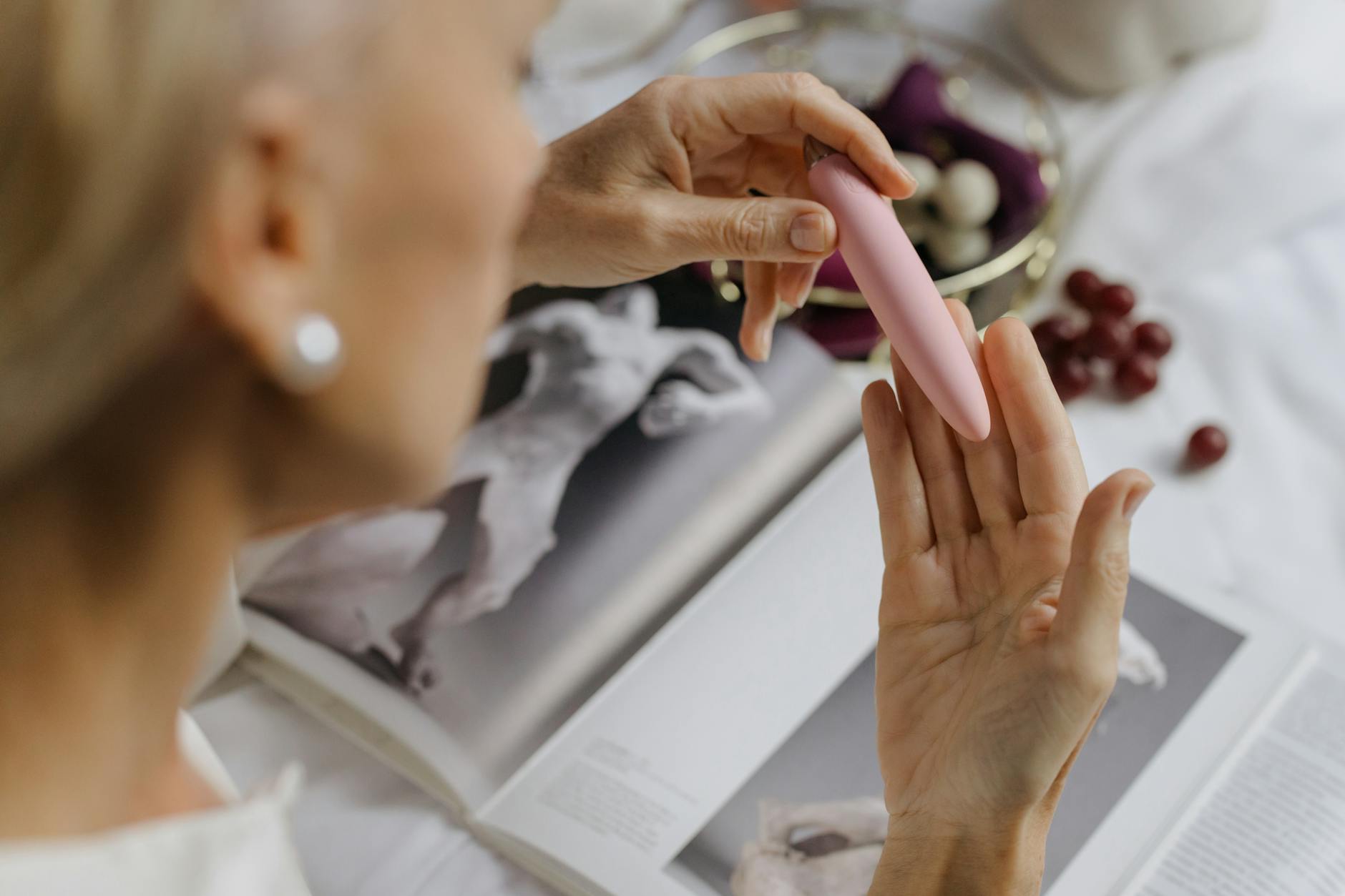
Here's what's actually happening
Let's be real. You're 40, 45, 50, and something's shifted. Orgasms take longer. Not impossible. Just... slower. What used to happen in five minutes now takes fifteen, twenty, sometimes thirty. And if you're like most people, your first thought is "am I broken?"
You're not. Your body is just working differently, and that's completely normal.
Why arousal slows down after 40
This isn't in your head. After 40, a few biological things change that directly affect how quickly your body responds to stimulation.
First, blood flow shifts. Your cardiovascular system is still great, but it doesn't respond to arousal as instantaneously as it did at 25. The clitoris engorges more slowly. The vagina lubricates more gradually. This is why you might feel like you need a longer warm-up period before things feel good.
Second, hormone levels dip even if you're not in perimenopause or menopause yet. Estrogen and testosterone both decline gradually from your late 30s onward, not in a cliff drop but a steady slope. Both of these hormones speed up arousal. Less of them means slower ignition.
Third, the nervous system itself ages. Nerve sensitivity doesn't disappear, but the signals travel with a tiny bit more delay. Your clitoris has roughly the same number of nerve endings as it did at 30, but the wiring is running at a slightly different speed.
None of this prevents orgasm. It just changes the timeline.
Why this matters for pleasure
The problem isn't usually the delay itself. The problem is that you're fighting it.
Most people grew up with a model of sex that looked like: foreplay, arousal happens quickly, orgasm happens, done. If you're accustomed to that rhythm and suddenly it takes twice as long, it's easy to convince yourself something's wrong or that you're "taking too long" and should hurry up.
That pressure ruins it. The moment you're thinking "why is this taking so long," your brain disconnects from sensation. Orgasm becomes harder, not because of your body, but because of what you're telling yourself about your body.
The second problem is that you might not be giving yourself enough time. If you're used to 10-minute sex sessions, and now you actually need 20-25 minutes for full arousal, the math breaks. That's not a failing. That's a boundary.
How lemon vibrators specifically help
This is where air-suction devices like Hallo Nancy's Lemons lemon clitoral vibrators come in. They're not magic, but they work with your body in a way that conventional vibrators sometimes don't, especially after 40.
Here's why. Traditional vibrators rely on friction and speed. They work well when your tissue is already engorged and responsive. But if you're in the slower-arousal phase, you need stimulation that doesn't require as much of your nervous system to have already woken up. Suction-based stimulation is gentler and more receptive to the slow-burn approach.
A lemon clitoral vibrator uses gentle pulsing suction rather than direct vibration, which means it can work effectively even when you're just starting to become aroused. You don't need to be at full arousal for it to feel amazing. This is huge if your arousal curve is longer. You can start earlier, build more gradually, and enjoy the process instead of waiting for a "ready" moment that takes forever to arrive.
Second, the design of the Lem and similar lemon sexual toys concentrates stimulation in a specific, intense way without requiring speed. Some people in their 40s and beyond find that slower, more focused sensation works better than the rapid-fire vibration of a traditional vibrator. You get intensity without chaos.
What to do practically
If you're experiencing delayed orgasm after 40, here's what actually moves the needle.
Build in time. Plan for 20-25 minutes instead of 10. This isn't compromise. This is respecting how your body works now. Set an intention: "We have plenty of time." The mental shift alone changes everything.
Start earlier. Don't wait until you "feel" aroused to bring a lemon vibrator in. Start using it 5-10 minutes into foreplay, when you're just starting to notice sensation. Let it build things gradually. This prevents the frustration of waiting for arousal that seems like it's not coming.
Experiment with settings. If you're using a lemon clitoral vibrator, don't jump to the highest setting. Start at pattern 1 or 2 and let yourself build. The Lem works beautifully at lower intensities, which can feel more attuned to slower arousal.
Change your story about it. This one's crucial. Delayed orgasm after 40 isn't a problem to solve. It's an invitation to slow down. Most people rush sex because they're anxious about "performance." After 40, your body is basically refusing to let you do that anymore. That's not a curse. It's a gift wrapped in biological fact.
Read more about optimizing your experience with a lemon clitoral vibrator in our guide on best lemon clitoral vibrator settings for different arousal stages.
When it's more than just age
Sometimes delayed orgasm has nothing to do with age and everything to do with something else going on. Stress, relationship tension, medication side effects, or previous trauma can all slow arousal regardless of your age.
If the delay is brand new and accompanied by loss of sensation, numbness, or pain, talk to a doctor. If it's happening only with a partner and not during solo play, that points to something different than biological aging. That's often about safety, attention, or anxiety.
If it's happening across the board and it's just taking longer, and sensation is still there, and orgasm still happens eventually? That's aging. And that's fixable through time, tools like lemon sexual toys, and adjusting expectations.
The bigger picture
Your 40s aren't a downgrade. They're a different operating system. The speed decreases, but intensity often increases. You know your body better. You're less in your head about what you "should" feel. You're more likely to ask for what you want.
Lemon vibrators work with this shift instead of against it. They're designed for longer, slower, more intentional pleasure. Which is, coincidentally, what most people after 40 actually want anyway.
People also ask
Is delayed orgasm after 40 permanent?
No. It's a normal shift, not a one-way door. Some of the delay reverses with hormone therapy if you're in perimenopause or menopause and treating it. Some resolves when you adjust your expectations and remove performance pressure. And some stays, but you learn to love the longer build. You're not stuck with any one version.
Does a lemon vibrator work the same way after 40 as it does at 30?
Yes and no. The vibrator works the same. Your body responds differently. Because arousal is slower, you might get more from starting earlier and using it longer, rather than waiting for full arousal. But the device itself? That's consistent. The difference is in how you're using it and what you're expecting from it.
Can medication cause delayed orgasm, or is it just age?
Both can. Antidepressants, blood pressure medications, and birth control can all slow arousal independently of age. If you started medication around the same time arousal slowed, that's worth discussing with your doctor. But if nothing changed except time, it's likely aging combined with changes in how much foreplay you're actually giving yourself.
Does lubrication help with delayed orgasm after 40?
Indirectly. Better lubrication means more comfortable sensation, which helps arousal feel good. But lube itself doesn't speed up arousal. What it does is remove friction discomfort so you can focus on sensation instead of discomfort. Use it, but understand that delayed arousal is about blood flow and nervous system response, not lubrication.
Why does my partner notice the delay but I don't?
Your partner is watching time pass. You're experiencing sensation, which doesn't have a clock. Your partner might be feeling anxious about whether you're enjoying yourself, which makes them hyper-aware of duration. The real fix is talking about it directly: "I'm enjoying this. I just need more time now. That's normal and it's okay." Many partners relax when they know the delay isn't a sign something's wrong.
Can I speed up arousal after 40, or do I just have to accept it?
You can't rewind your biology. But you can work with it. Reducing stress, improving cardiovascular fitness, managing hormone levels if applicable, removing pressure and performance anxiety, using tools like lemon clitoral vibrators that work with slower arousal, and building in actual time all help. The goal isn't to return to 25-year-old speed. It's to enjoy the arousal you have.
What comes next
Delayed orgasm after 40 is one of those things that feels like a problem until you understand what's actually happening. Then it's just data. Your body needs more time. So give it more time. Use tools that work with slower arousal instead of against it. And remove the story that something's wrong.
If you want to explore how other factors like stress, relationship dynamics, or medications might be playing a role, reach out to talk through your specific situation. That's what I'm here for.
Your pleasure matters, and it matters at whatever speed your body wants to move.