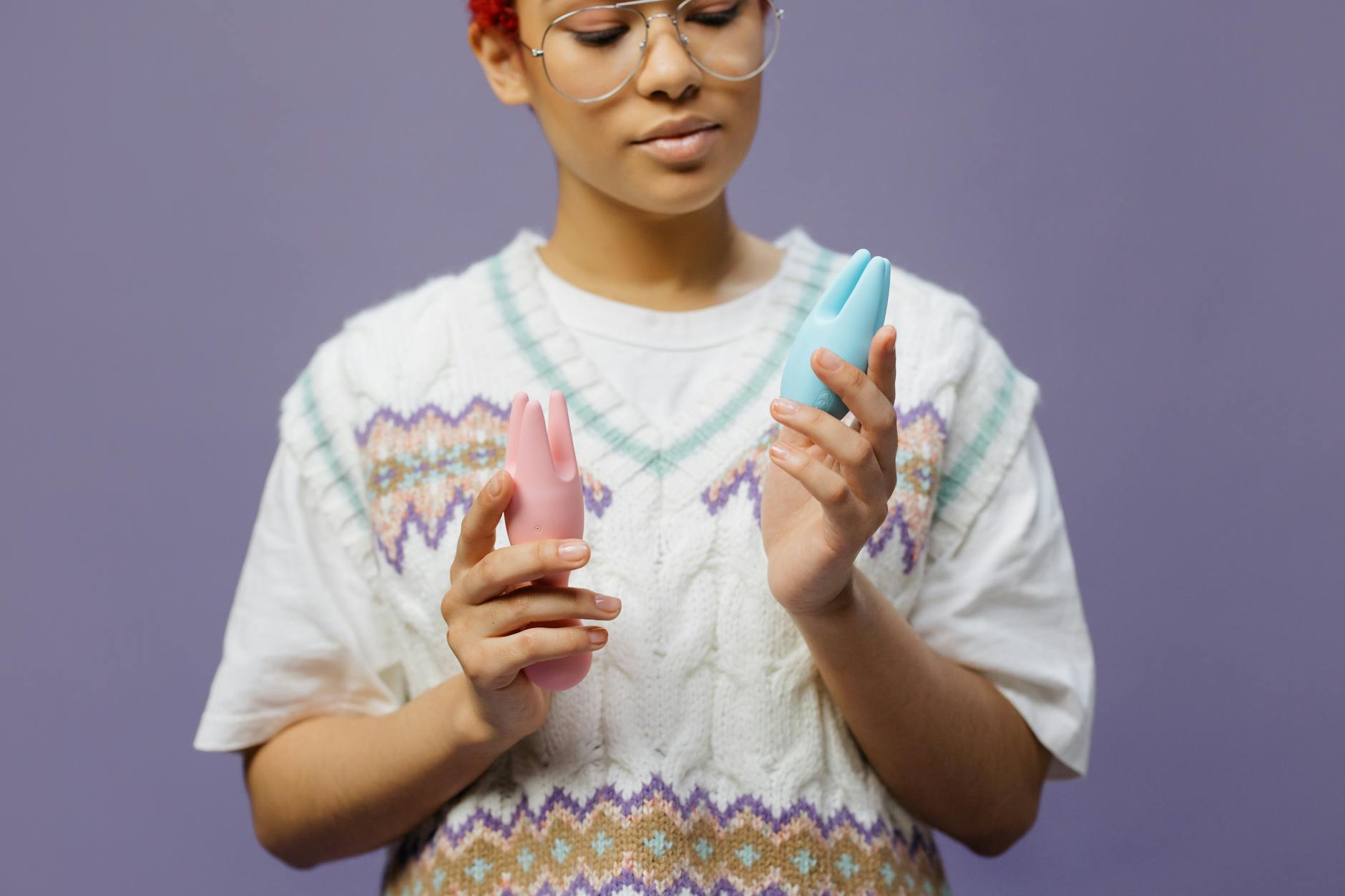
Let's talk about the orgasm that disappeared
You used to feel it everywhere. Full body, undeniable, the kind of release that left you genuinely speechless for a few seconds. Now it's muted. Maybe it's localized to one spot. Maybe it's there but feels distant, like you're watching it happen rather than inside it. Or maybe it's so faint you're not even sure if that counted.
Most people assume this means something's broken. It's not. What's changed is usually one of three things: your nervous system, your physical anatomy, or the context in which you're experiencing pleasure. Often it's all three. And the thing about those changes is that lemon clitoral vibrators can address them in ways solo sensation can't.
Why orgasm intensity actually fades
Here's what I see in my practice: women describe their orgasms getting quieter around the same time they describe their relationships getting busier, their stress becoming chronic, their bodies holding more tension. Correlation, not causation, right? Except neuroscience says otherwise.
Your nervous system has two modes: sympathetic (fight or flight) and parasympathetic (rest and digest). Orgasm lives in the parasympathetic state. You can't be genuinely, deeply aroused if your body is primed for threat. When you're stressed, overworked, or chronically vigilant, your nervous system doesn't have bandwidth for the full physiological cascade that makes orgasm feel intense.
Additionally, repetition desensitizes. Your body builds tolerance to the same stimulus in the same way. If you've been using the same technique, the same rhythm, the same pressure for years, your neurons aren't firing with the same urgency. They've learned the script.
The role your pelvic floor is playing (even if you don't know it)
Here's a detail nobody tells you: your pelvic floor contracts during orgasm. It has to. That muscular engagement is literally part of the sensation. But if your pelvic floor is chronically tight (from sitting all day, holding stress, previous trauma, or just getting older), it can't contract as forcefully because it's already partially clenched.
It's like trying to make a fist when your hand is already halfway closed. The movement is constrained. The release is muted. You get a smaller, quieter orgasm because your body physically can't generate the full tension-release cycle.
This is where lemon vibrators change the equation. The sucking mechanism of air-pulse clitoral vibrators like the Lem engages different nerve pathways than traditional vibration. It bypasses pelvic floor tension in a way that lets sensation register more intensely. You're not fighting against an already-clenched muscle. You're working with a different sensory channel entirely.
What antidepressants, hormones, and aging are actually doing
If you're on SSRIs or SNRIs, orgasm intensity is likely part of the conversation you didn't want to have with your doctor. These medications blunt the neurotransmitters (serotonin, norepinephrine) that fuel intense sensation. The tradeoff is often worth it for your mental health, but it's still a real loss.
Hormonal shifts do something different. Lower estrogen means thinner tissue, which means sensation registers differently. It's not that you can't feel pleasure. It's that the signal reaches your brain on a different frequency. Some people describe it as a higher-pitched, more localized sensation rather than a full-body wave.
And aging? Your body gets better at some things and less efficient at others. Your cardiovascular system doesn't mobilize blood as quickly. Your nervous system takes longer to build arousal. Your body temperature regulation changes. All of these affect how intensely you experience orgasm.
None of this means you're broken. It means your body has evolved, and the tool you're using might need to evolve too.
How lemon sexual toys restore intensity
When I recommend lemon vibrators to clients describing faded orgasm intensity, it's because the mechanism works differently than what they've been doing. Air-pulse technology (like you get with a lemon clitoral vibrator such as the Lem) doesn't vibrate the tissue. It creates rhythmic suction and release. That pattern triggers a different set of nerve endings and creates a different physiological response.
It often feels more intense because it's novel. Your nervous system hasn't habituated to it yet. But more importantly, it works with your body's current state rather than requiring it to perform the old way.
For people on antidepressants, the suction mechanism sometimes bypasses the dulling effect by engaging sensory pathways that SSRIs affect less directly. For people with pelvic floor tension, it provides sensation without requiring muscular engagement. For people experiencing hormonal changes, the broader stimulation pattern often compensates for the changed tissue sensitivity.
The conversation with your partner matters here
If you're in a long-term partnership, your partner might interpret your search for a lemon adult toy as dissatisfaction with them. It's not. It's dissatisfaction with the lack of novelty, with the predictability, with your body's diminished capacity for the old response.
The generosity move is to frame this as collaboration, not substitution. You're not replacing them. You're adding a tool that helps you access sensation you've been missing. If they can participate in that discovery, even just by being present while you explore, the experience often deepens for both of you.
If your partner resists, I'd gently push back. Your pleasure is not a referendum on your relationship. It's a right.
When to add other elements
Intensity isn't just about physical sensation. Context shapes it hugely. If you're rushing, distracted, or not genuinely interested, no vibrator will compensate. Before you blame your body or your toy, ask yourself: am I actually aroused, or am I performing arousal because I think I should be?
If the answer is the latter, the orgasm problem isn't the real problem. The disconnection is. That's worth addressing separately, possibly with a therapist who understands pleasure.
If you're genuinely aroused but sensation is muted, then add time. Budget 20-30 minutes instead of 10. Let your body build state slowly. Use water-based lubricant. Warm up with your hands first before bringing in the lemon vibrator. The intensity you're missing often returns when you stop treating orgasm like a sprint and start treating it like a conversation.
The role of arousal patterns
Something I notice: the people with the most intense orgasms aren't necessarily the ones with the most sensitive bodies. They're the ones who've figured out their own arousal architecture. They know what thoughts get them there. They know what physical sequences matter. They've built a repeatable pathway to deep parasympathetic engagement.
If your intensity has faded, you might simply be using an old map. Your body's geography shifted. The route that used to work doesn't anymore. That's not a loss. It's an invitation to explore new terrain.
Lemon clitoral vibrators are excellent for that exploration because they're not just stronger. They're different. They provide a new stimulus that can reveal previously unmapped pathways to intense sensation.
People also ask
Can lemon vibrators restore orgasm intensity I lost after starting antidepressants?
Possibly, yes. SSRIs blunt sensation by affecting serotonin and norepinephrine signaling, which dulls the full arousal cascade. Lemon clitoral vibrators like the Lem work through a different mechanism (air-pulse suction rather than vibration) that sometimes bypasses that dulling effect by engaging sensory pathways less affected by antidepressants. It's worth trying, but if the intensity doesn't return, talk to your prescriber about adjusting timing (taking your dose after sex rather than before) or switching medications.
Do I need a more expensive clitoral vibrator for better orgasms?
Not necessarily. Price doesn't correlate with intensity. What matters is whether the mechanism (suction, vibration pattern, pressure) matches your current body. A lemon sucker designed for air-pulse stimulation might deliver more intensity than a more expensive traditional vibrator if your pelvic floor tension or hormonal changes mean you need a different input. Experiment across price points before assuming expensive equals better.
How long does it take to feel intensity return with a lemon vibrator?
Usually within the first few sessions. Novelty itself creates intensity because your nervous system hasn't habituated yet. If you're not feeling a difference after five or six uses, the mechanism might not match your body's current needs. That doesn't mean lemon vibrators don't work for you. It might mean the specific pattern or pressure isn't aligned with your current sensitivity.
Is the fading intensity a sign I need hormone replacement therapy?
Not automatically. Low intensity can be hormonal, but it's more often nervous-system-related (stress, chronic tension, dissociation) or mechanical (pelvic floor tension, desensitization). If you're also experiencing hot flashes, night sweats, vaginal dryness, or other clear menopause markers, then yes, talk to your doctor. But faded orgasm alone isn't diagnostic of anything except that your body's response has changed.
Can pelvic floor physical therapy restore intensity without a vibrator?
Absolutely. Pelvic floor PT addresses the muscular constraint that mutes orgasm. The therapist teaches you to relax as well as contract, which expands your body's dynamic range and often restores intensity. However, combining PT with a lemon clitoral vibrator speeds the process because you're working on both the muscular and the sensory sides simultaneously.
Should I tell my partner I'm using a lemon vibrator for more intense orgasms?
I'd say yes, but frame it as discovery, not dissatisfaction. Try: "My body's shifted, and I found a tool that helps me feel more sensation." If they're a secure partner, they'll be curious. If they're defensive, that's useful information about your relationship. Your pleasure matters. How they respond to you prioritizing it tells you something important about how you're actually being treated.
The plot twist nobody expects
The intensity you're chasing might not be about sensation at all. I've worked with clients who regained powerful orgasms not because they switched to lemon vibrators, but because they addressed the anxiety underneath. The muted orgasm was their nervous system's way of protecting them.
If that resonates, therapy is the right first move. If you've already done that work and sensation is still faded, then yes, try lemon sexual toys. A lemon clitoral vibrator can genuinely restore intensity. But it works best when paired with attention to your actual arousal state, your pelvic floor health, and your relationship context.
Your body didn't break. It evolved. The tool just needs to evolve with it.
If you're ready to explore, start with understanding your body's current needs. Read through our guide on finding the right lemon vibrator for your body type and sensitivity level. And if questions come up along the way, we're here. Reach out at /contact anytime.