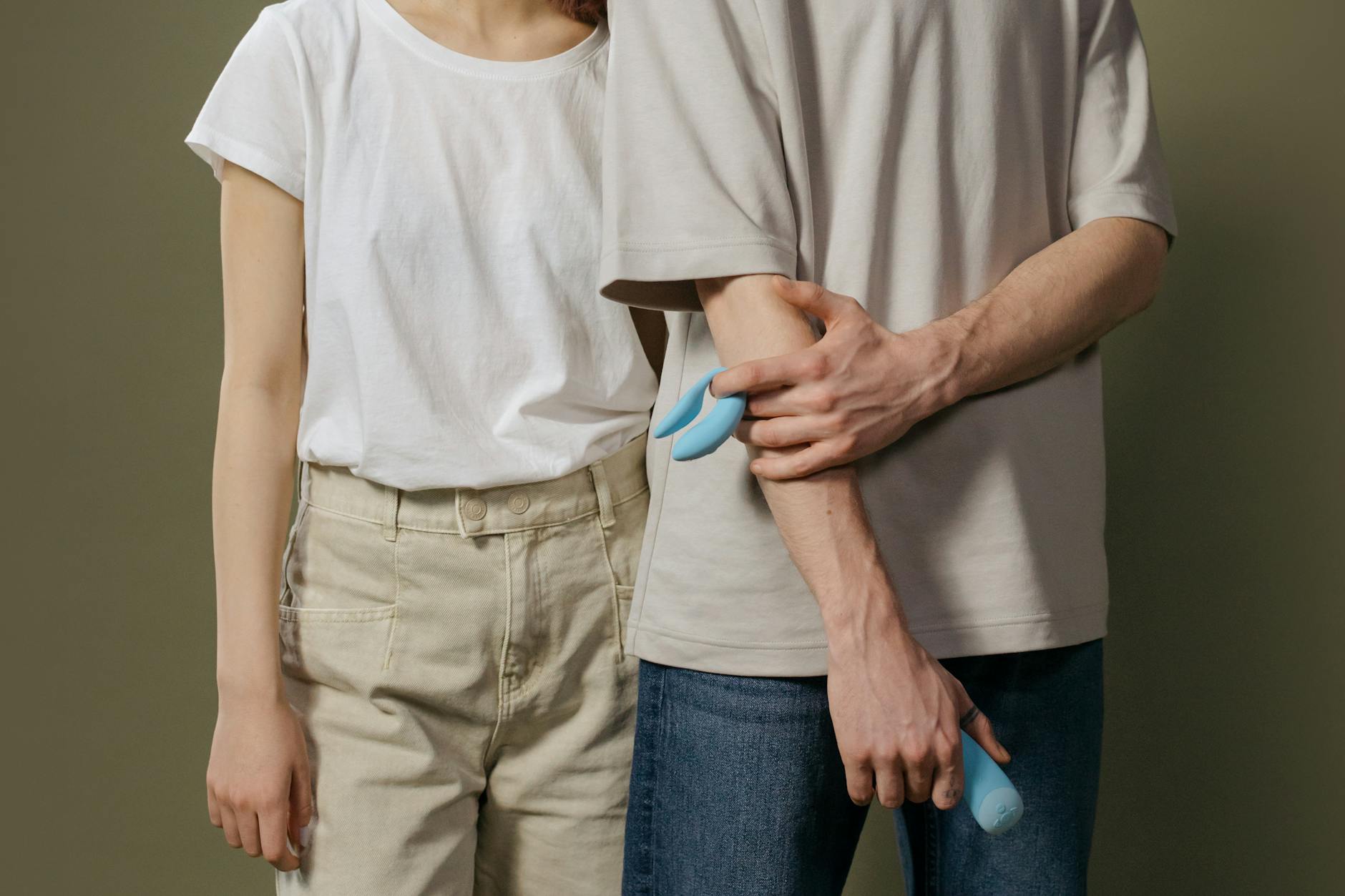
Here's what actually happens on SSRIs
You start an antidepressant because you need it. Your mental health improves. And then somewhere around week three, you notice your body isn't responding the way it used to. Arousal comes slower. Orgasm feels distant or doesn't happen at all. When it does, it's muted. Flat. Like watching pleasure happen to someone else on a screen.
This is real. About 40 to 60 percent of people on SSRIs experience some form of sexual dysfunction. It's not a personal failing. It's not psychological. It's your serotonin.
Why SSRIs affect arousal and orgasm
SSRIs work by increasing serotonin in your brain, which is excellent for mood regulation and anxiety. But serotonin isn't just floating around in your skull. It's also active in your genitals, and high serotonin literally dampens the neurochemical cascade that creates arousal and orgasm.
Think of it this way: dopamine and norepinephrine are the chemicals that say "yes, this feels good." Serotonin is more cautious. It's the "let's slow down and think about this" chemical. When you flood your system with extra serotonin to fix your mood, you inadvertently tell your body to pump the brakes on pleasure.
The result is predictable: reduced libido, delayed or absent orgasm, and erectile issues in people with penises. For people with vulvas, arousal takes longer to build, the clitoris doesn't engorge as quickly, and the orgasmic response becomes delayed or weaker.
What lemon clitoral vibrators change
Here's where Hallo Nancy's Lemons products enter the picture. A clitoral vibrator like the Lem works through direct stimulation and suction, which bypasses the normal arousal pathway. Instead of waiting for your brain to signal "this is sexy," you're triggering the nerve endings directly.
On SSRIs, this matters because your clitoris still has full neural density. The nerve fibers haven't changed. What's dampened is the chemical signaling that makes arousal feel like arousal. A lemon clitoral vibrator creates physical stimulation that your nervous system recognizes and responds to, independent of your mood or serotonin levels.
Many people on SSRIs report that vibrators are the only way they can orgasm reliably. It's not that the medication destroyed your capacity. It's that you need more direct, consistent stimulation to reach the threshold.
The rhythm and intensity shift
When you're on SSRIs, slower isn't better. Your body needs stronger, more consistent stimulation to build toward orgasm. This is where the design of a lemon vibrator helps. The suction and pulsing patterns provide continuous, targeted stimulation that's harder to lose focus on.
Starting on a lower setting won't work the way it might have before medication. Most people on SSRIs who use a Lem find that patterns three through six deliver results, whereas patterns one and two feel like background noise.
The second shift is duration. Budget 20 to 40 minutes instead of ten. Your body hasn't broken. It's just operating on a different timeline now. Patience plus consistent stimulation plus the right device equals outcome.
Mental factors that compound the physical ones
Honestly, the psychological piece is almost as important as the medication itself. When you can't orgasm, shame and frustration build quickly. You start avoiding sex. Your partner (if you have one) interprets silence as rejection. The relationship cools. And suddenly you're grieving a part of yourself that actually just needs a different approach.
What I see work in my practice is people who separate the two conversations early: "My body is processing medication differently" is distinct from "I don't want intimacy anymore." The first is temporary or manageable. The second isn't necessarily true.
Using a lemon clitoral vibrator alone, without any partner pressure or performance anxiety, can actually rebuild trust in your body. You're proving to yourself that pleasure is still available. That matters for your mental health almost as much as the orgasm itself.
When to talk to your doctor
If sexual dysfunction on SSRIs is affecting your quality of life, mention it. Options exist. Your psychiatrist might suggest:
Timing the medication around your sexual activity (taking it after, not before). Lowering the dose slightly, if your mental health permits. Switching to a different SSRI (some, like sertraline and paroxetine, carry higher sexual side effects than others). Adding a second medication like bupropion to counteract the sexual dampening. Topical treatments or medications timed around sexual activity.
The point: don't suffer in silence. Medication is supposed to improve your life, not crater your intimacy. The right combination exists.
Why the Lem or other lemon sexual toys work specifically
The reason I recommend lemon vibrators to people on SSRIs is that the suction-plus-vibration pattern creates a stimulation profile that's hard to achieve manually or with standard vibrators. You're not relying on speed alone. You're using both pressure and rhythm simultaneously.
For people whose arousal is chemically dampened, this dual-action approach seems to clear a higher threshold than vibration by itself. It's like the difference between knocking on a door and kicking it open. The door's the same. The approach changes the outcome.
Combining strategies that actually work
One lemon vibrator, even the best one, isn't always the whole answer on SSRIs. Here's what moves the needle in my clients' experience:
First, plenty of lubrication. SSRIs don't typically cause physical dryness the way menopause does, but arousal takes longer to trigger natural lubrication. Water-based lube removes that friction barrier and lets you focus on sensation.
Second, eliminate time pressure. The moment you think "this should have happened by now," you've triggered your sympathetic nervous system, which shuts arousal down further. Set aside dedicated time. Turn off notifications.
Third, solo play before partnered play. If you're in a relationship, using a lemon vibrator alone first rebuilds your own baseline. Then bring your partner in once you know what works for your medicated body.
Fourth, communicate with your partner explicitly: "My body is responding to medication. This isn't about you. Here's what helps." That conversation alone often dissolves the resentment that builds when sex stops happening.
The long game
SSRIs are saving your life or significantly improving it. The sexual side effects are real, but they're not permanent or insurmountable. Your body isn't broken. Your brain chemistry is just differently configured right now.
A lemon clitoral vibrator isn't a workaround. It's a tool that works with your neurochemistry instead of against it. And the sooner you stop treating the sexual dampening as a personal failure and start treating it as a solvable technical problem, the sooner pleasure returns to your life.
Your mental health matters. Your sexual pleasure matters too. Both things are true at the same time.
People also ask
Can SSRIs permanently damage your ability to have orgasms?
No. Sexual side effects from SSRIs are reversible. When you stop the medication or switch to a different one, arousal and orgasm typically return to baseline within weeks. Even while you're taking SSRIs, orgasm is absolutely still possible. It just requires different stimulus or approach. The nerve endings, the brain pathways, the hormones are all intact. They're just chemically modulated.
Which SSRIs have the least sexual side effects?
Bupropion has the fewest sexual side effects because it works on dopamine rather than serotonin, and dopamine actually supports arousal. Sertraline (Zoloft) and paroxetine (Paxil) have the highest rates of sexual dysfunction. Escitalopram (Lexapro) and citalopram (Celexa) fall somewhere in the middle. But individual response varies wildly. What tanks one person's libido might barely touch another's. Your psychiatrist can adjust based on your experience.
Do lemon vibrators work better than other vibrators when you're on antidepressants?
The suction-and-vibration combination that defines lemon clitoral vibrators seems particularly effective for people whose arousal threshold has been raised by SSRIs. That said, the "best" vibrator is the one you'll actually use. Some people respond better to wand vibrators. Some prefer internal vibrators. Experiment. That said, air-suction vibrators like the Lem by Hallo Nancy's Lemons tend to deliver results for SSRI users because they bypass the need for sustained manual arousal.
Should I take my SSRI before or after sex to minimize sexual side effects?
Timing doesn't really work for SSRIs because the drug is already in your system consistently. The effect on serotonin is constant, not dose-dependent on any given day. Stopping the medication or switching are more effective than timing tricks. Talk to your psychiatrist if sexual side effects are significant enough that you're considering skipping doses.
Can I use a lemon vibrator if I'm on multiple psychiatric medications?
Absolutely. Sexual side effects can stack when you're on multiple meds, but they're still manageable. The combination of medication, patience, the right stimulus (like a lemon clitoral vibrator), and communication with your partner is usually enough. If sexual dysfunction becomes unbearable, that's a sign to revisit your medication regimen with your doctor.
Is it normal to feel disconnected from pleasure while on SSRIs even with a vibrator?
Yes, and there's a name for it: anhedonia. It's the flattening of pleasure response across the board, not just sexual pleasure. If you're experiencing this, mention it to your psychiatrist. It might mean your dose is too high, or you might benefit from augmentation with another medication. A vibrator can help trigger the physical response, but if the emotional connection to pleasure has vanished, that's a medication adjustment question, not a device question.
Why this matters for your relationship
If you're in a relationship and one partner is on SSRIs, the sexual shift affects both of you. The partner on medication often feels guilt and shame. The other partner often interprets the change as rejection. Neither of those stories is true, but both are common.
Using a lemon vibrator together, or introducing it into solo play while keeping your partner informed, can actually heal that dynamic. It removes the pressure for performance and replaces it with a shared tool that works. How Lemon Vibrators Help When Your Partner Has Low Desire covers this territory more deeply if you're looking for ways to reconnect.
SSRIs don't have to mean the end of your sex life. They mean a shift. And shifts, when you understand them, become opportunities.
If you're struggling with sexual side effects and want to talk through options, reach out. We're here to help you navigate this.