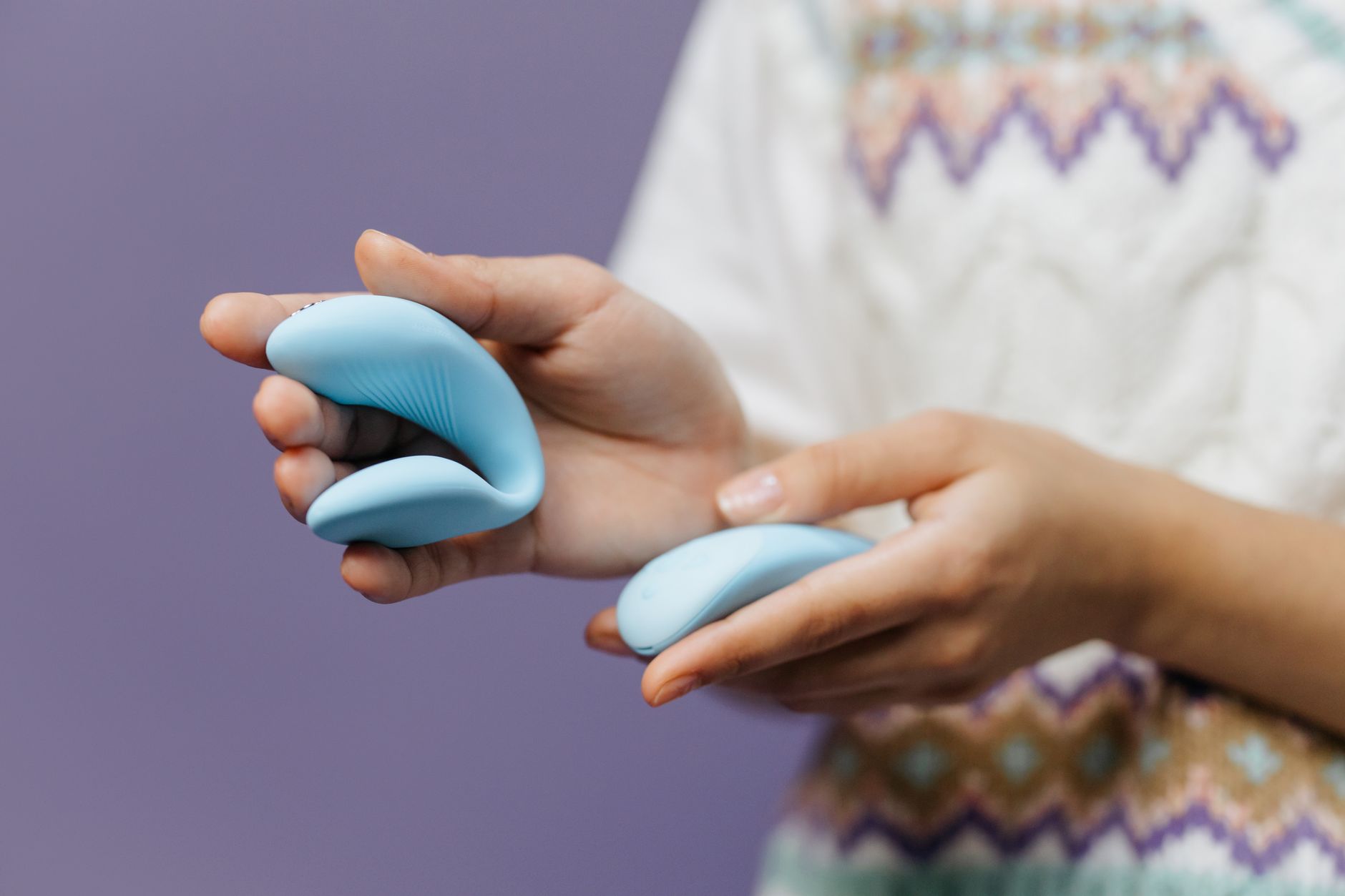
Let's stop pretending orgasm timing is a fixed thing
Honestly? The idea that there's a "normal" orgasm timeline is one of the most persistent myths about pleasure. Someone tells you they come in two minutes with their lemon vibrator, someone else mentions twenty, and suddenly you're timing yourself like you're running a 5K. The truth is way less linear.
Orgasm timing depends on roughly fifteen different variables that all interact with each other. Your nervous system state, what you had for breakfast, whether you're thinking about work, if you've had an orgasm in the last week, stress levels, sleep quality, and literally whether Mercury is in retrograde (okay, not that last one, but sometimes it feels like it). Add a device into the mix like a lemon clitoral vibrator, and you're introducing another layer: the specific sensation it produces, whether it matches your body's wiring, and if you're using it in a way that actually feels good rather than how you think you're supposed to.
What the research actually shows (and doesn't)
Studies on orgasm latency are weirdly sparse, partly because measuring something this personal and variable is genuinely difficult. What we do know: the average reported time to orgasm with a partner is around 7-13 minutes. Alone, it's often faster, usually 4-8 minutes. But those numbers? They're medians, not rules. Some people consistently come in under two minutes. Others take thirty or more. Both are completely normal.
Here's the bit nobody talks about: the people who report the shortest times aren't necessarily the people with the most pleasure. Time and intensity aren't linked the way we think they are. A ten-minute orgasm can feel surface-level and anticlimactic. A two-minute one can be earth-shattering. The lem vibrator's suction mechanism works differently than traditional vibration, which means your personal timeline with it might not match your timeline with anything else you've used.
The actual factors that change your timing
If you're wondering why your orgasm takes wildly different lengths of time depending on the day, here's what's really going on.
Your stress load. Cortisol is basically orgasm's kryptonite. When you're under pressure, your nervous system is hyperactive and protective. It takes longer to shift into the relaxed state your body needs to come. This is why weeknight quickies might take twenty minutes, but that unhurried Saturday morning with nothing planned might take five.
How much you've already come recently. Your body has a refractory sensitivity curve. After an orgasm, your clitoris becomes temporarily hypersensitive. Use a lemon clitoral vibrator the day after an intense session and you might come faster because the tissue is already primed. Come three days in a row, and by day three your body might need more time to build to climax because the novelty has worn off slightly.
Whether your pelvic floor is actually relaxed. Most people hold tension in their pelvic floor without even knowing it. You can be holding your breath, tightening your inner thighs, or bracing your core without realizing it. This all slows down orgasm timing. Taking three deep breaths before you start can genuinely cut your time by half.
What's happening in your head. If you're mentally checked in and focused on sensation, orgasm arrives faster. If you're thinking about your inbox, whether you look weird right now, or if your partner can hear you, you're adding mental friction that delays everything. This is actually why how to use lemon vibrators when you feel pressure to perform becomes such a common issue. The pressure itself becomes the barrier.
Your hormonal cycle. If you have a menstrual cycle, your orgasm timeline shifts week to week. Around ovulation, you typically come faster and more intensely. During your luteal phase (the two weeks after ovulation), it takes longer but can feel deeper. This isn't a flaw. It's your body's rhythm. Work with it instead of against it.
How you're using the device. Not all lemon sucker vibrators are used the same way. Holding it directly on your clitoris produces faster results. Floating it just off the tissue, using it on a lower intensity and building slowly, takes longer but often feels better. Some people need the broadest contact surface. Others need focused, pinpoint pressure. Your personal lem vibrator technique matters more than the device itself.
Why speed doesn't equal success
Here's the conversation nobody's having: faster isn't better. I've worked with so many people who come quickly and feel disappointed because they assumed it should take longer. They think there's something wrong with them. There isn't.
There's also a weird cultural narrative that says if you're coming in five minutes with a toy, you should feel a little bit embarrassed about it. You shouldn't. Your body isn't broken because it responds quickly to the right stimulation. That's actually a sign that you know yourself well and you've found something that works.
Conversely, if it takes you twenty minutes or thirty, that's not a problem either. Some people's nervous systems are built to need more time, more buildup, more storytelling. That's not dysfunction. That's just how you're wired. The only timing that matters is yours.
How to actually stop obsessing over the clock
If you find yourself timing yourself with your lemon vibrator, here's what I want you to do instead: notice what you're feeling instead of what you're measuring. Are your hips moving? Is your breathing changing? Are you getting more or less focused? Those are the real signals that you're progressing toward orgasm. Not the minutes.
Set a frame for the session. "I'm giving myself twenty minutes" or "I'm doing this until I feel satisfied, however long that takes." Then put the phone away. No checking the time. The moment you introduce time-checking, you've introduced performance anxiety, and you've basically activated a governor on your own nervous system. You can't relax and perform simultaneously.
If you consistently feel like your timing is abnormal, ask yourself: am I comparing myself to someone else's timeline, or am I actually experiencing difficulty? Because those are different problems. Comparison anxiety is just noise. Genuine difficulty with reaching orgasm might point to stress, medication side effects, or something worth talking through with a healthcare provider.
The partner conversation (if you have one)
If you're using a lemon clitoral vibrator with a partner, timing becomes a different question entirely. Sometimes partners feel insecure if you orgasm quickly with a toy but slowly with them. This is actually really common, and it doesn't mean anything is wrong with your relationship.
The honest version: a toy does one thing really well. A partner does many things. Your body might have a specific preference for the focused, consistent sensation that something like a lem vibrator provides. That doesn't diminish the emotional and physical intimacy of partnered sex. It's just a different nervous system activation.
If timing is becoming a point of friction in your relationship, how to use lemon vibrators with a partner who thinks toys are cheating addresses the deeper conversation. Often it's not really about the toy. It's about feeling wanted, feeling sufficient. That's worth untangling directly.
What actually indicates a real concern
You should talk to a healthcare provider if: you've suddenly changed and can't reach orgasm at all, when you previously could. You're experiencing pain during the process. Your timing shift coincides with a medication change or major health shift. Or you're feeling persistent distress about it.
If your timing is just different from what you expected, or different from what someone else told you theirs was? That's not a concern. That's just being human.
Your orgasm timeline is yours alone. Your lemon vibrator is a tool, not a timer. Use it however feels good, for however long that takes, and stop measuring yourself against an imaginary standard that was never real in the first place.
People also ask
How long should it actually take to orgasm with a lemon vibrator?
There's no should. Real timelines range from two minutes to thirty minutes or longer, and all of those are normal. What matters is what feels satisfying to you, not what fits a predetermined expectation. Your personal baseline might be five minutes one day and fifteen the next, depending on stress, sleep, your cycle, and a dozen other factors. If you're consistently reaching orgasm, your timing is working.
Why does it take me longer with a lemon clitoral vibrator than it used to with other toys?
The sensation profile is different. Suction-based lemon vibrators create a different type of stimulation than traditional vibration. Your body might need a retraining period of a few sessions to fully respond to this particular sensation. You might also be subconsciously holding back if you're new to the device. Give it three to five sessions before you decide whether the timing is right for you. Your nervous system learns through repetition.
Is it normal to come really quickly with a vibrator but slowly with a partner?
Completely normal. A vibrator does one thing with perfect consistency. A partner's touch varies, and your brain is also processing emotional and social information alongside physical sensation. Both matter, but they activate different neural pathways. A quick orgasm with a toy doesn't mean you're less attracted to your partner. It means your body has a clear preference for a specific type of stimulation, and that's useful information, not a red flag.
Can you train yourself to come faster or slower with a lemon vibrator?
Not really. You can train yourself to relax, to reduce performance pressure, and to spend more time in foreplay. Those all shift your baseline slightly. But your fundamental nervous system response is pretty stable. Trying to force a different timeline usually backfires because forcing introduces tension, and tension delays orgasm. Work with your body's natural pace instead of against it.
What if I'm taking longer than I used to before I started antidepressants or a new medication?
Timing shifts are a really common side effect of certain medications, especially SSRIs. This is very worth mentioning to your prescriber. There are often adjustments, timing changes, or alternative medications that minimize this effect. This isn't something you have to accept as permanent, and there are usually solutions. Have the conversation with your doctor.
How do I stop timing myself and just relax?
Put the phone in another room. Set a time boundary before you start ("I'm doing this for twenty minutes") and then forget about the clock. Notice your body instead: breath changes, muscle tension, heart rate. Those are real-time feedback about what's happening. The moment you shift from measuring to sensing, your nervous system relaxes slightly, and paradoxically, you often come faster. The goal isn't speed anyway. The goal is feeling good.