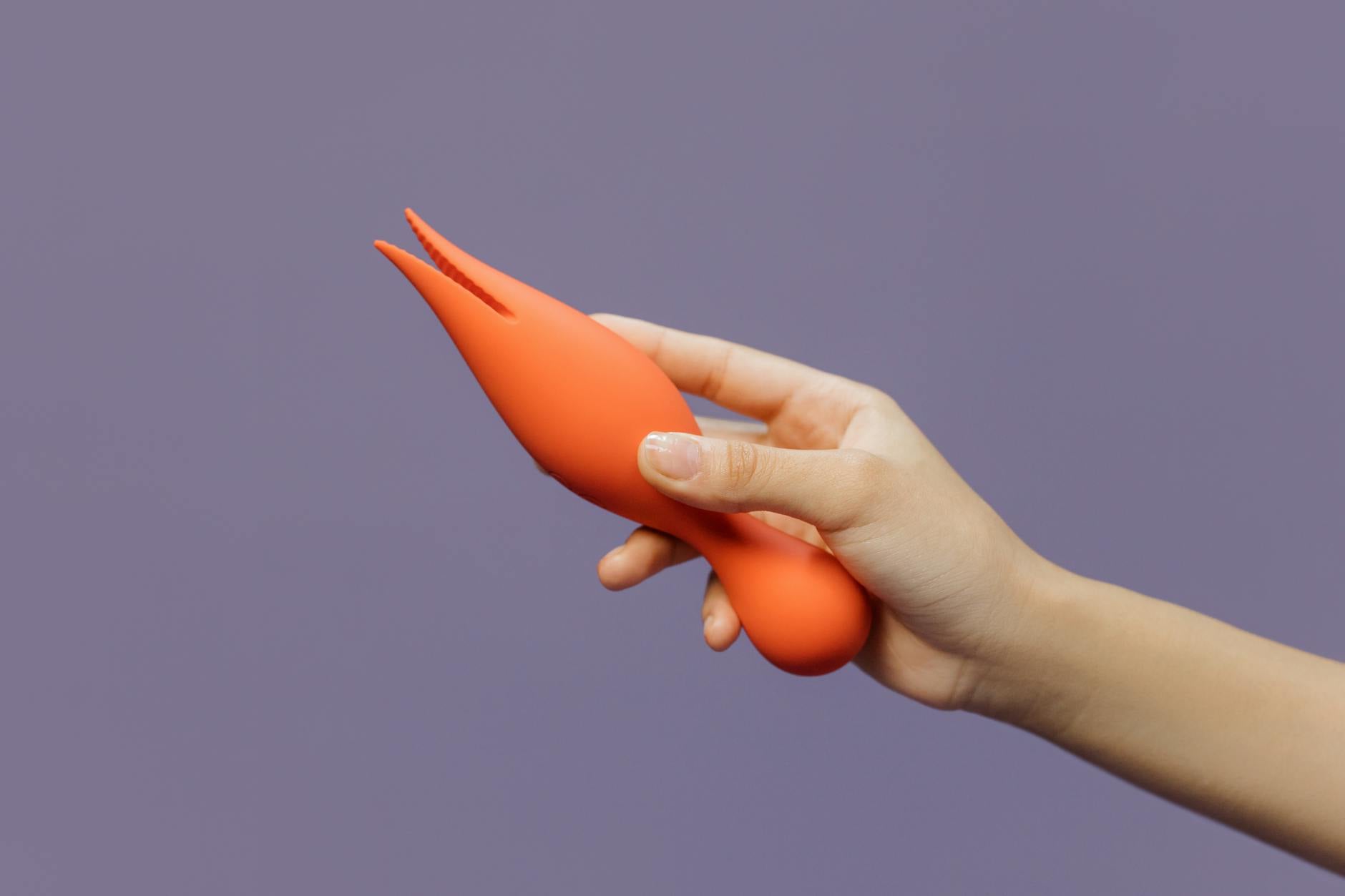
How to Use Lemon Vibrators for Better Orgasms With a Partner
Here's the thing nobody says out loud: bringing a lemon vibrator into partnered sex is not about fixing anything. It's about adding something.
Most couples introduce toys into their intimate life because they've convinced themselves something is broken. The orgasm isn't happening fast enough, or frequently enough, or at the right angle. One partner wants stimulation the other person's body can't provide. And yes, sometimes that's true. But most of the time, the real reason is simpler and less fraught: you both want to explore a new sensation together, and you're genuinely curious what a lemon clitoral vibrator might unlock.
The conversation doesn't have to be heavy. It shouldn't be heavy. But it does need to happen first.
The conversation before the toy arrives
The worst approach is surprising your partner with a vibrator. I don't care how thoughtful you think you're being. Surprise toys feel like criticism wrapped in a gift box. They land as "I think you need this" when what you meant was "I want to try this together."
Instead, have the conversation when you're not about to be intimate. When you're cooking, in the car, somewhere emotionally neutral. The opening line matters:
"I've been thinking about trying something new together, and I'm curious what you'd feel about exploring it. No pressure either way, but I wanted to ask."
Then describe what you're interested in without any performance language. Not "I think we need to spice things up" (that word alone makes most people defensive). Say something like: "I've read about lemon vibrators and how different the sensation is. I'm genuinely curious if we'd both enjoy it together."
Be ready for three types of responses.
One: your partner is immediately interested. Great. Move forward together. Pick it out together online. Send them the link. Make it collaborative.
Two: your partner needs time to think about it. Don't push. Give them a week. Ask again gently. Often hesitation isn't a no, it's just nervousness, and a little runway helps.
Three: your partner says they're not interested. Okay. That's their boundary, and it's real. Respect it fully. Don't sulk or negotiate. A resentful partner who feels coerced into sex with a toy you wanted will not enjoy themselves, and you won't either. The experience will sour both of you on it.
If you're the partner being asked and you feel uncertain, ask yourself this honestly: "Am I not interested because I'm genuinely not interested, or because I'm embarrassed?" Those are different decisions. Embarrassment often lifts once you're actually in the moment. A genuine lack of interest won't, and that's fine.
How to introduce it without killing the mood
When you've both agreed to try, the next stumbling block is the actual moment. You're both aroused, and suddenly someone has to be the person who gets up and retrieves the vibrator.
Make that less awkward by deciding in advance when it's coming out. Not the exact second, but roughly when in your intimate time. Some couples like to use it during foreplay to build arousal. Others prefer to introduce it when things are already very active, so there's less mental shift required.
Have it within arm's reach. Keep it charged. If you're using a lemon clitoral vibrator for the first time together, start at a lower pattern. Many people expect intensity from toys and are shocked by how powerful even a medium setting is. A lemon vibrator's suction sensation is completely different from traditional vibration, and that difference can be disorienting if you're expecting something familiar.
One partner introducing it to the other isn't a power move. It's actually the most intimate choice. The receiving partner gets to relax and receive attention and sensation. The introducing partner gets to be present with them, watching their response, adjusting speed and position based on what you see. That's connection.
Talk as you go. "Does this feel good?" "Want it higher or lower?" "Should I move it?" These aren't clinical questions. They're intimate. They're the opposite of mood-killing because they keep both of you anchored in what's actually happening instead of what you think should be happening.
The patterns and positions that actually work
If you've never used a lemon vibrator with a partner before, start conservatively. Set it to pattern 1 or 2. Most people think they want intensity, but intensity without familiarity is overwhelming. You want to feel the sensation, not be jolted by it.
With a partner present, you have options a solo experience doesn't offer. Your partner can use their hands elsewhere while the vibrator handles direct stimulation. They can vary rhythm and pressure on your body while the vibrator stays steady. They can slow down and speed up based on what they feel happening in your body.
For people with vulvas, the most straightforward start is applying the vibrator with gentle pressure to the outside of the clitoris, not directly. The lemon vibrator's suction sensation is already intense. Direct contact can be too much too fast. Your partner can observe whether you're moving toward or away from the sensation and adjust.
Many people find that different patterns work better at different stages of arousal. What felt intense at 50 percent arousal might feel perfect at 90 percent. The beauty of having a partner present is they can experiment with you in real time.
Patterns that work well for most people with clitoral stimulation are either the steady ones (no pulsing, just consistent suction) or the ones that build gradually. The chaotic ones tend to be disorienting. But everyone is different. Expect experimentation. That's the point.
When to use it and when to skip it
Here's something couples rarely discuss: not every intimate encounter needs a vibrator.
Introduce it as an option, not a default. Some nights you'll want to try it. Other nights you'll want to reconnect skin-to-skin without any tools. Both are valid. Both offer something different. A relationship that revolves entirely around toys gets mechanical the same way a relationship that rejects them entirely gets stuck.
Many couples find lemon vibrators work best when one partner has a longer arousal timeline than the other. If penetration happens before clitoral arousal is where it needs to be, a vibrator bridges that gap efficiently without anyone feeling rushed or pressured to "catch up."
It also works incredibly well for couples navigating how lemon vibrators improve arousal timing for people over 40, where the body's natural pace changes and a little external support transforms the experience from frustrating to fluid.
What to do with the thing between uses
Keep your lemon clitoral vibrator in a clean, dry place. If you're sharing it, this matters more than you'd think. A vibrator stored badly becomes a source of friction (not the good kind) because someone always has to hunt for it or it's in an unsexy place like the bathroom cabinet.
Get a small storage pouch or keep it in a drawer you both access. Make it as normal as toothpaste. Normalcy kills shame. And shame is the enemy of good partnered sexuality.
Clean it before and after with warm water and a toy cleaner if you have one. Nothing fancy. Just basic hygiene.
Charge it regularly. Nothing worse than the mood arriving and the vibrator being dead.
The conversation after
Don't skip this part. Right after sex, while you're still physically close, have a quick check-in.
"What did that feel like for you?" "Anything you want to try differently next time?" "Did that feel good, or was it weird?"
These conversations create the feedback loop that turns toys from novelties into genuine tools that serve both of you. If your partner loved it, you now know. If they tolerated it but didn't love it, that's information too. If it wasn't the right tool or timing, you can adjust.
Many couples try a lemon vibrator once, feel uncertain, and never try again. But sometimes that first time is just the learning experience. The second time, knowing what to expect, lands completely differently. Give it a real shot before deciding it's not for you.
FAQ: Common questions about lemon vibrators with partners
Can a lemon vibrator replace penetration or manual stimulation?
No, and it shouldn't be framed that way. A lemon vibrator is additive, not substitutional. The best partnered experiences use multiple types of stimulation in sequence. Your hands, your mouth, penetration, and toys all offer different sensations. Variety is what creates deeper pleasure, not any single tool.
What if my partner gets jealous of the vibrator?
That jealousy usually isn't really about the toy. It's about fear of being replaced or not being enough. Address the actual fear, not the vibrator. Reassure your partner that this is something you're doing together, not something you're doing instead of being together. Have them involved in choosing it, using it, exploring it. Exclusion breeds resentment. Collaboration breeds connection.
Should we use a lemon vibrator every time we have sex?
No. Novelty matters. If you use it every single time, it becomes expected and loses its element of special. Most couples find that using it maybe once or twice a week creates the best balance. It remains exciting without becoming routine.
Is it normal for it to take several tries before we enjoy it together?
Completely normal. The first time often feels awkward or uncertain because there's a learning curve. You're both adjusting to a new sensation and new dynamic. By the third or fourth time, many couples report that it clicks and feels integrated into their normal intimate rhythm.
What if only one of us orgasms when we use it?
That's fine. Partnered sex doesn't require synchronized orgasms. One person might orgasm from the vibrator while the other finds pleasure in different ways. The point is mutual enjoyment, not identical experience. In fact, why lemon vibrators work better for sensitive areas highlights how different bodies respond in different ways, and that's a feature, not a bug.
Can we use a lemon vibrator if we have different pleasure preferences?
Absolutely. A lemon clitoral vibrator is particularly useful for couples with different arousal timelines or sensitivities. One partner can use it for stimulation while the other uses their body for connection. It's a tool that helps bridge different needs, not a thing that creates problems.
The real benefit
What most couples report after introducing a lemon vibrator is not just better orgasms, though that often happens too. It's that they had a real conversation about desire. They got curious about each other's bodies together. They tried something new without shame.
That willingness to experiment and communicate is the actual magic. The vibrator is just the excuse to practice it.
If you're considering bringing a lemon vibrator into your partnered life, do it. Have the conversation. Be willing to experiment. And remember that this is about exploring pleasure together, not fixing something broken. Your relationship is already whole. You're just making it richer.