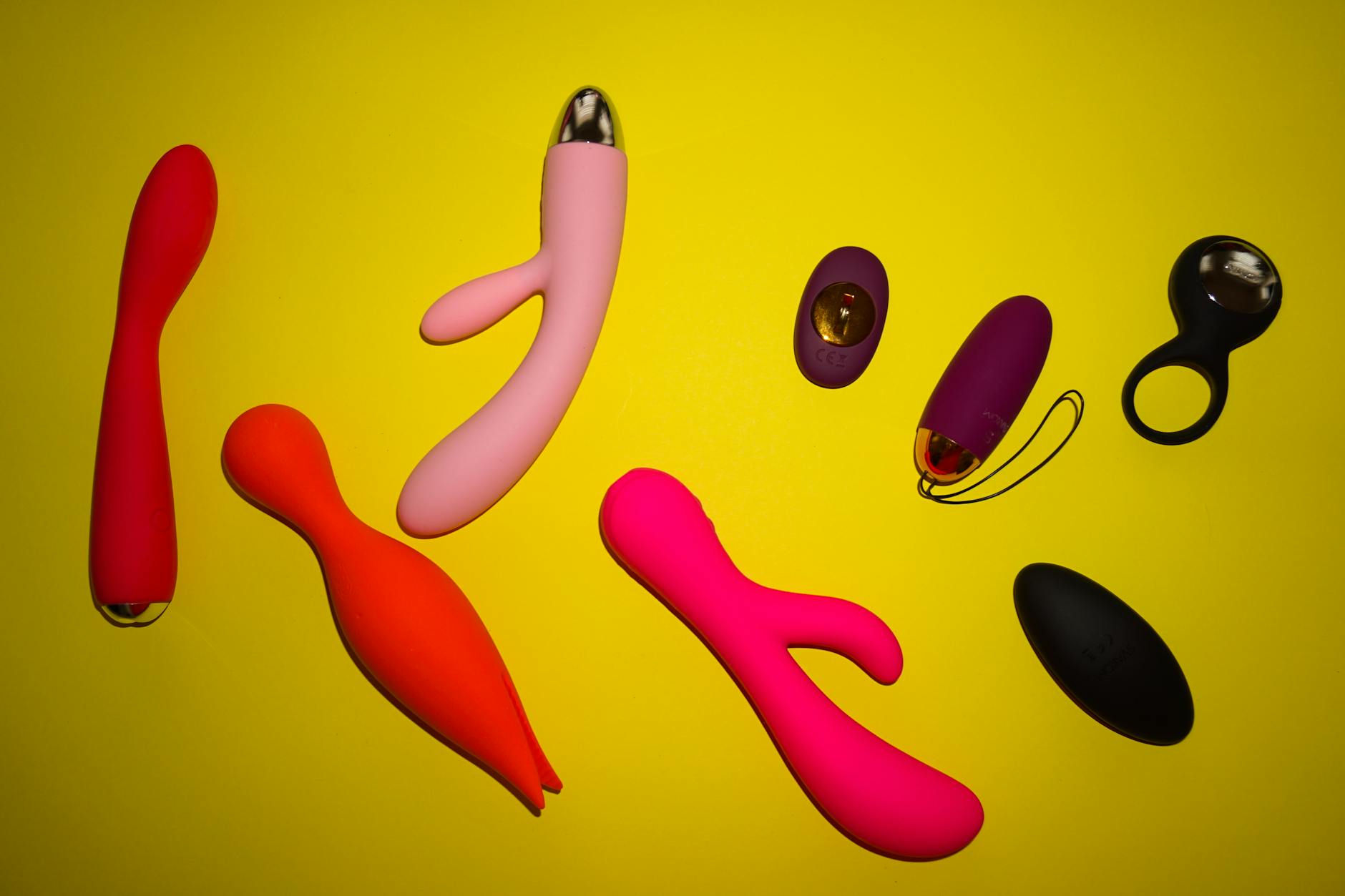
The silence that sneaks up on you
Let's be real. There's a specific kind of emptiness that happens when you stop feeling desire altogether. Not the kind where you're too tired or too stressed, though that's part of it. This is deeper. It's when you realize you've lost track of what actually turns you on, what makes your body respond, what you want when you're alone with just yourself.
You might be able to go through the motions. You might even find your way to pleasure sometimes. But it feels like you're watching yourself from a distance, like your body is responding but you're not really home in it.
This happens more often than anyone admits. Years of prioritizing a partner's pleasure, or managing an anxious nervous system, or negotiating your own needs away in small increments until one day you realize you don't even know what you want anymore. Disconnection from desire isn't a sexuality issue. It's a relationship issue. With yourself.
Why disconnection happens (and it's not a you problem)
Desire isn't just physical. It lives in trust. You have to trust that your body is yours, that what you want matters, that you deserve to feel good. When those three things get shaky, desire goes quiet.
This happens after years in a relationship where your pleasure got scheduled around someone else's. It happens after relationships ended badly and left you wondering if wanting something made you needy. It happens when you've spent so long managing someone else's emotions that you stopped checking in with your own. It happens when you've internalized the idea that good partners are selfless, and selflessness means your own pleasure isn't a priority.
The nervous system picks up all of it. If your body has learned that your wants don't matter, or that expressing them creates conflict, arousal stops bothering to show up. Your brain and your body are just protecting you.
The why behind starting slowly
Here's what doesn't work: trying to force desire back through willpower or performance. Buying a lemon clitoral vibrator and expecting it to reignite something that's been sleeping for months. Scheduling sex like it's a dentist appointment.
What does work is rebuilding trust with yourself first. That takes time. A lemon vibrator can help, but only if you approach it as a conversation with yourself, not as a tool to produce an outcome.
Start by removing the performance pressure entirely. Not during sex with a partner. Not trying to have an orgasm. Not to prove anything to anyone. Just exploring what happens when you give yourself permission to feel things without needing them to lead anywhere.
How to start when desire feels foreign
Three key things to set up first.
Privacy that actually feels private. Not stolen moments. Not listening for a partner's keys. Not half-aware that someone might walk in. Real, unrushed privacy where your only job is noticing what your body does.
Time with no other agenda. Set aside 20-30 minutes minimum. Your nervous system needs to know this isn't squeezed in between other obligations. It has to feel like something you're doing for yourself, not another task on a list.
A space that doesn't feel clinical. Lighting matters. Temperature matters. Whether the room feels like you or like a waiting room matters. Light a candle if that's your thing. Put on music if silence feels heavy. This is about rewiring the association between pleasure and safety.
Starting with the lemon vibrator: the first session
Don't jump straight to penetration or direct clitoral stimulation. Your nervous system might not be ready for intensity yet.
Start by exploring sensation externally. Thighs, outer labia, the space between your legs. Use a lemon vibrator on the lowest setting and spend time noticing what different patterns feel like. The lemon's suction design means you can start very gently, which is exactly what you need right now. You're not trying to reach anything. You're just gathering information about what your body can feel.
Many people find that this low-stakes exploration is where disconnection starts to crack open. You're not performing. You're not trying to reach a destination. You're just listening.
If nothing happens for 20 minutes, that's okay. Notice that too. Your nervous system is learning that it's safe to be present in your body without pressure.
Building capacity over weeks, not nights
This is not a sprint. Think in terms of four to six weeks of regular exploration, not four to six nights.
Week one and two: external exploration only. Lemon vibrator on low or medium settings. Thighs, labia, whatever feels manageable. The goal is sensation, not arousal. Your job is just to show up and pay attention.
Week three and four: start introducing slightly more direct stimulation if it feels natural. Clitoral contact if that's comfortable, but still not rushing toward anything. Keep the setting low. Notice what patterns your body leans into.
Week five and six: if you feel ready, you can experiment with slightly higher intensity or longer sessions. But the rule stays the same. No agenda. No performance. Just presence.
If desire starts returning, fantastic. But if it doesn't yet, you're still doing the work. You're rewiring the message your nervous system received for years. That takes time.
When you feel nothing and that's frustrating
Some people rebuild desire in a few weeks. Others take months. And honestly, some people realize their desire was being suppressed not by themselves but by their situation.
If you're using a lemon vibrator regularly and still feeling numb, that's real information. It might mean you need to look at what else is happening in your relationship or your life. It might mean you need to talk to a therapist, not a sex coach.
One thing that helps: separate pleasure from performance. You don't have to use the vibrator to feel good to consider the session successful. Success is that you showed up. You took 20 minutes for yourself. You paid attention. That alone is rebuilding the trust you need.
Reconnecting if you have a partner
If you're rebuilding desire in a relationship, your partner needs to know this is a solo project first. Not because they should feel excluded. Because the conversation needs to stay focused on you regaining trust with yourself, not on what you owe them.
That said, some couples find that solo exploration creates space for honest conversations. When you start feeling something again, even small, you can tell your partner what you're discovering about yourself. What you like. What you want. The tools that work.
Those conversations are where real intimacy lives. Not in performing pleasure, but in being honest about what's actually happening in your body.
When lemon vibrators are part of the answer
The design of a lemon clitoral vibrator matters here. Suction-based stimulation is gentler than direct vibration on sensitive tissue. It doesn't require the kind of sustained pressure that can feel invasive if you're already struggling with feeling safe in your body.
That's why some people who've felt disconnected for years find that the right tool makes reconnection possible. It's not magic. It's just biomechanics matching psychology.
FAQ
Is it normal to feel nothing when using a lemon vibrator after months of disconnection?
Completely normal. Pleasure is not a light switch. After your nervous system has spent time protecting you by shutting down sensation, it takes patience to convince it that feeling again is safe. Numbness often fades gradually, not suddenly. Some sessions you'll notice a little more sensation than the last time. That's progress.
How long does it usually take to feel desire returning?
There's no timeline that's correct for everyone. Some people feel shifts in a few weeks. Others take two to three months. The people who rebuild desire fastest are usually the ones who stop measuring progress by whether they orgasm and start measuring it by whether they felt present in their body. That shift in focus is often what allows pleasure to return.
What if I feel desire coming back but then it disappears again?
That's normal too, especially early on. Your nervous system is learning. Some days it will feel safe and some days it won't. This is not failure. It's part of the process. Keep showing up without judgment and the pattern usually stabilizes over time.
Can using a lemon vibrator alone rebuild desire, or do I need therapy too?
A vibrator is a tool for reconnection. Therapy is often the place where you understand why the disconnection happened in the first place. They work well together. Some people rebuild desire through one or the other. Many people need both.
Should I tell my partner I'm exploring on my own?
That depends on your relationship and what feels safe. Some couples benefit from honesty about the process. Others prefer privacy while rebuilding happens. The important thing is that you're not hiding it because you feel ashamed. You're being private because you need space to reconnect with yourself. There's a difference.
What if I rebuild desire but my partner and I still don't want to have sex together?
That's real information about your relationship. Rebuilding desire with yourself doesn't automatically mean you want to channel it toward your partner. Sometimes reconnection helps you realize the relationship isn't working. Sometimes it helps you feel clear about what you want from your partner and communicate that. Either way, you're back home in your body. That clarity is valuable.
The door that opens when you stop performing
Disconnection from desire is not a personal failure. It's usually evidence that you've been prioritizing things outside yourself for too long. Using a lemon vibrator to rebuild connection doesn't mean you're broken or that something's wrong with you. It means you're taking seriously the radical act of centering your own pleasure.
That process looks different for everyone. For some people, how to use lemon vibrators when you feel touch-averse after stress is where to start. For others, how lemon vibrators can help when you're rebuilding desire after years together speaks more directly to the situation. The thread that runs through all of it is permission. Permission to have needs. Permission to feel things for no reason at all. Permission to use whatever tools help you find your way back to yourself.
Start small. Be patient. Show up for yourself the way you'd show up for someone you love. That's where reconnection lives.