Pleasure doesn't have an expiration date
Let's be real. By 50, most of us have internalized a very specific cultural message: your sexual prime was in your 20s, and it's been declining ever since. Your body changes. Your interest supposedly wanes. You're supposed to be grateful for what you got.
Here's what's actually true. Pleasure doesn't expire at 50. What often happens is that shame, self-consciousness, and a lifetime of filtering your own desires through someone else's expectations finally stack so high that accessing pleasure feels like trespassing on someone else's property. It's not that you can't. It's that you've been taught not to.
The anatomy of self-consciousness in midlife
In my years working with couples in their 50s and beyond, I've noticed a pattern. Self-consciousness about pleasure doesn't usually show up because the body has changed. It shows up because the stories we tell ourselves about the body have been reinforced for decades.
You've spent 20, 30, 40 years managing other people's comfort with your sexuality. Maybe you've accommodated a partner's preferences over your own for so long that you've lost track of what you actually want. Maybe you've been taught that wanting pleasure is selfish, or that aging women who want sexual satisfaction are somehow unseemly. Maybe you've had experiences that taught you that your body wasn't safe, and that lesson stuck.
Midlife is when those patterns finally get loud enough to notice. And that's actually useful information.
Self-consciousness about pleasure after 50 is not about your body. It's about permission. And that's something you can address directly.

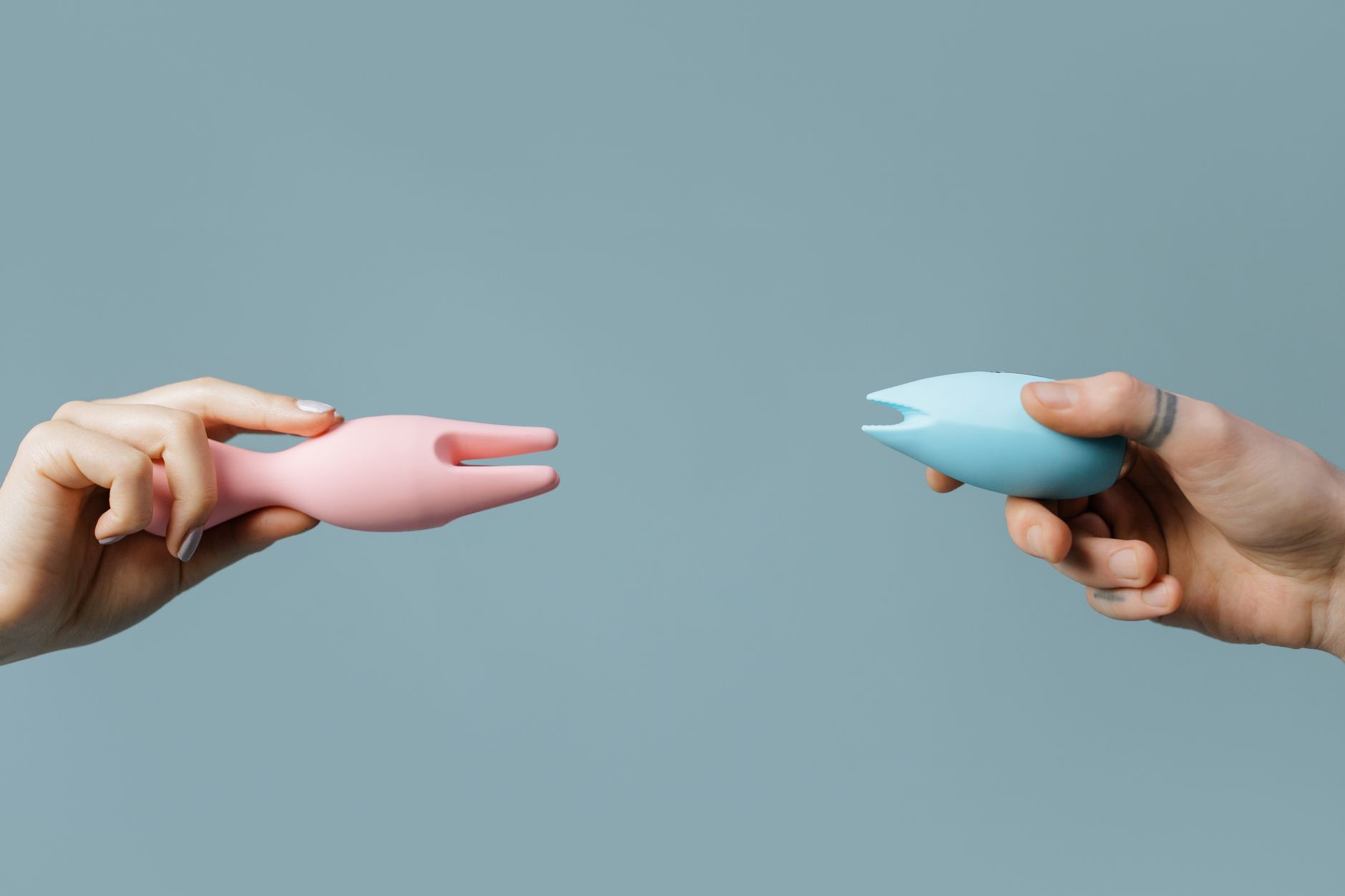
Photo by cottonbro studio on Pexels
Why lemon vibrators actually help with shame
You might think a vibrator is just a tool for sensation. In some ways, yes. But for people working through self-consciousness about pleasure, lemon clitoral vibrators do something subtly powerful. They shift the story from "I shouldn't want this" to "I'm allowed to design my own experience."
Here's the mechanism. When you use a lemon vibrator deliberately, intentionally, on your own terms, you're making a small but concrete statement: my pleasure matters enough to invest time and attention in it. Not as a favor to a partner. Not as a performance. As something that belongs to you.
Lemon vibrators are also discrete, which matters. They're small enough to feel manageable. They're not intimidating. Many people in midlife who've never used a vibrator before find that starting with something like the Lem (a clitoral suction vibrator designed to feel intuitive and intimate) removes the barrier of "this feels too medical" or "this feels too intense." You're not committing to some elaborate setup. You're just exploring what feels good.
The self-consciousness often dissolves once you start. Not because the vibrator magically erases shame, but because direct physical sensation interrupts the shame loop. Your brain can't simultaneously be running the story "this is wrong" and feeling genuinely good. Sensation wins.
The permission problem (and how to solve it)
Most of the self-consciousness I see in midlife isn't actually about the body. It's about whether you feel entitled to pleasure at all.
If you're partnered, this often emerges as an unspoken rule. You might tell yourself that wanting a vibrator means your partner isn't enough. That's not true, but it's a common protective story. A relationship coach's perspective: a partner who is threatened by your pleasure is showing you important information about their own insecurity, not about your worth. That's a conversation to have directly, ideally with help.
If you're solo, the barrier is often internal: a voice that says you should be over this by now, or that self-pleasure is less legitimate than partnered sex, or that wanting stimulation at 50+ is somehow embarrassing. These are learned beliefs, and you can unlearn them.
Here's what helps. Start small. Give yourself explicit permission to explore for 15 minutes without any goal other than curiosity. No pressure to orgasm. No pressure to feel anything specific. Just: what does this feel like?
For many people over 50, this is the first time they've ever done that. The contrast is striking. You realize you've spent decades performing pleasure instead of experiencing it.
Physical shifts and what they mean
Your body does change after 50, and that's worth acknowledging directly.
Tissue sensitivity shifts. Arousal takes longer. Lubrication might feel less copious. The pelvic floor loses some elasticity. These are normal changes, and they're not failures. They're just information you need to work with.
Self-consciousness often gets tangled up with these physical shifts. You notice something feels different, your brain interprets it as wrong, and shame gets attached to the whole thing. The reality is simpler: your body needs different input now, and that's fixable.
Lemon vibrators help here because they're designed to work with the body as it is now, not as it was at 25. A clitoral suction vibrator doesn't rely on direct friction the way some devices do. It stimulates through a gentler mechanism. For people with shifting sensitivity, this often feels more accessible and more pleasurable than traditional vibration.
Water-based lubricant becomes more important, not because you're broken, but because it helps. Use it freely. Longer warm-up time matters. Budget 20 to 30 minutes instead of expecting instant readiness. These aren't compromises. They're the actual parameters of pleasure after 50.
Reframing pleasure as self-knowledge
One of the most useful reframes I offer clients is this: exploring your own pleasure isn't selfish or indulgent. It's basic information gathering. You're learning how your body works now, what brings you satisfaction, where your boundaries are, what feels good and what doesn't.
That knowledge is valuable in every context. Solo, partnered, whatever. When you know your body, you can communicate about it. You can direct a partner toward what actually works. You can recognize when something isn't working and adjust. That's not a small thing.
Self-consciousness often dissolves when pleasure shifts from being something you do to keep someone else happy into something you do because you're interested in understanding yourself better. The motivation changes, and the shame has nowhere to land.
Building the habit without the pressure
If you're starting from a place of significant self-consciousness, the goal isn't to immediately feel liberated. It's to build a sustainable practice that gradually shifts your relationship with your own desire.
Start twice a week, same time, same quiet space. No distractions. No phone. No expectation of a specific outcome. You're training your nervous system to recognize that pleasure is safe and that it belongs to you.
Over weeks and months, this becomes easier. The shame narrative gets quieter. Your body's responses become more predictable and more satisfying. You start to remember why pleasure matters, not as a performance metric, but as a genuine part of being alive.
Use a device that feels intuitive to you. For many people, lemon adult toys like the Lem work well because they're small, intuitive to use, and don't require a learning curve. Less mental energy on "am I using this right," more energy on sensation.
When a partner is involved
If you're in a relationship, using lemon vibrators solo is not a threat to that relationship. It's actually often the inverse. People who know their own pleasure are more confident, more communicative, and often more present with partners.
But conversation matters. You don't need permission, but you do need clarity. If your partner seems uncomfortable, that's worth exploring: what are they actually worried about? Often it's not about the vibrator at all. It's about feeling desired, or about their own insecurity, or about a story they've been told about what sex "should" look like.
A straightforward conversation: "I want to explore my own pleasure more intentionally. This is about me learning what feels good, not about anything lacking between us." Most secure partners will get there. If they don't, that's information worth having.
The deeper shift: reclaiming pleasure as your own
Here's what I see happen when someone commits to this practice in midlife. The self-consciousness doesn't vanish overnight, but it stops being the dominant voice. You start to notice that pleasure feels good, that it's allowed, that it's yours to claim.
Over time, many people report that their pleasure becomes more accessible, more intense, more satisfying than it was at 25. Not because the body suddenly works better, but because the permission is finally there. You're not managing anyone else's comfort anymore. You're not performing. You're just experiencing.
That shift is profound. And it changes more than just sex. It changes how you move through the world. It changes what you're willing to ask for and what you're willing to say no to.
Pleasure in midlife is available to you. Not as a recovery of what you had. But as something new that only becomes possible once you stop believing you don't deserve it.
FAQ: Self-Consciousness and Pleasure After 50
Is it normal to feel self-conscious about pleasure at 50+?
Completely normal. You've had decades to absorb cultural messages about aging bodies and sexuality. Those narratives don't reflect reality, but they're loud. Self-consciousness usually isn't about your body being "wrong." It's about having internalized shame. Once you realize that, you can address it directly.
Will a lemon vibrator make me feel less self-conscious immediately?
Not instantly, but it will interrupt the shame narrative pretty quickly. Physical sensation is a powerful override. Once your body experiences genuine pleasure without judgment, the mental stories about shame get quieter. Most people notice a shift within 2 to 3 weeks of consistent exploration.
How do I talk to a partner about using a lemon clitoral vibrator if I've never used one before?
Keep it simple and honest: "I want to explore my own pleasure more. I'm getting a vibrator to experiment solo. This is about me learning my body better, not about anything missing in our relationship." If they push back, that's worth exploring together, maybe with a therapist who specializes in couples and sexuality.
Is it true that sensation becomes numb after 50?
No. Sensation changes, but it doesn't disappear. Arousal pathways stay active. The clitoris retains full nerve density. What does change is how quickly you respond and what kind of input feels best. Lemon vibrators work well with these shifts because they're designed to be effective without requiring intense friction.
Will my partner feel threatened if I use a vibrator?
That depends on your partner and their own insecurity, not on you. Many partners actually find that a partner who knows their own pleasure is more present and more satisfied. But some partners have been taught that vibrators are a threat. That's something to address directly, ideally in conversation or with a therapist.
How often should I use a lemon vibrator if I'm just starting out?
Start with twice a week, 15 to 20 minutes, no pressure for a specific outcome. You're building a habit and training your nervous system to recognize that pleasure is safe. Consistency matters more than frequency. Over time, you'll find your natural rhythm.
You deserve this
Self-consciousness about pleasure after 50 is real, but it's not permanent. It's a story you learned, and stories can change. Lemon sexual toys, used deliberately and without judgment, become a way to rewrite that story. Not as "I'm performing sexuality for someone else," but as "my pleasure is mine, it matters, and I'm allowed to explore it."
That reframe changes everything. If you're navigating self-consciousness in a relationship, consider reaching out to work through it together. You don't have to do this alone.