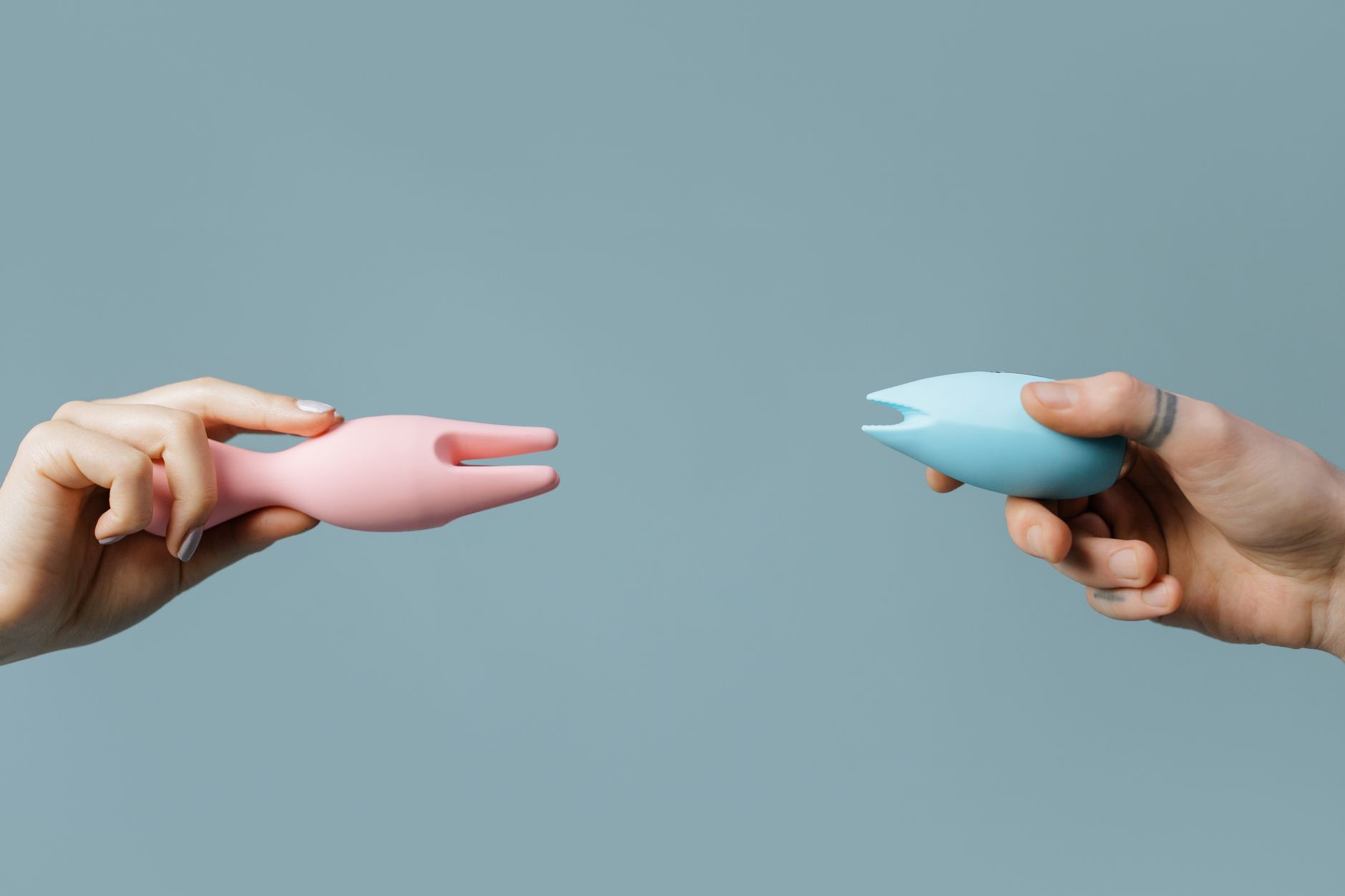
Let's name the thing nobody talks about
Divorce doesn't just end a marriage. It rewires how you experience vulnerability, trust, and pleasure. You're not starting fresh in your new relationship. You're starting with scar tissue, protective instincts, and a body that's learned to hold back.
That's not a flaw. It's a fact. And it changes how you approach intimacy with a new partner.
Here's what I see in my practice again and again: people who've been through divorce often struggle not with desire but with permission. Permission to ask for what they want. Permission to feel good without guilt. Permission to take up space in someone else's pleasure. Lemon vibrators, and clitoral vibrators more broadly, can be a powerful tool for rewiring that permission at your own pace.
Why your body might feel different now
Divorce is a specific kind of trauma. It's not just the loss of partnership. It's often years of built-up resentment, mismatched desire, or disconnection that leads up to the break. Your nervous system learned to protect you during that time. It learned that vulnerability in the bedroom could mean disappointment, rejection, or worse. That learning doesn't vanish when you meet someone new.
Many people tell me they feel "numb" after divorce. Not numb as in medicated. Numb as in I-don't-know-how-to-feel-pleasure-anymore because feeling pleasure felt unsafe for so long. Your clitoris has memory. Your pelvic floor has memory. Your brain has memory.
A lemon vibrator can help you recover that memory on your terms, alone first, before you bring someone else into it. That solo work is not a detour. It's foundation.
Starting alone first is not optional
I know the impulse. You've found someone new. They're patient. They're interested. You want to skip the loneliness and dive straight into "normal" partnered sex. Don't.
Spending 2-3 weeks exploring a lemon clitoral vibrator solo does several things at once:
It separates your pleasure from someone else's reaction. For years, your pleasure may have been tangled up with your ex-partner's needs, moods, timing. Using a vibrator alone untangles that wire. You're not performing. You're not checking in. You're just feeling.
It teaches your body that feeling good is safe now. Numbness often comes from your nervous system staying in a low-grade protective state. Orgasms, especially the kind that lemon vibrators are good at delivering, signal safety to your nervous system. You're literally rewiring through pleasure.
It gives you data about what you actually like now, post-divorce. You're not the same person who got married. Your body's preferences may have shifted. Your tolerance for certain kinds of stimulation may be different. Find out in private first.
Do this consistently. Not frantically, but regularly. Three or four times a week, 15-20 minutes. You're not rushing toward an orgasm. You're creating a practice.
When you're ready to bring your partner in
Here's what I recommend saying, approximately: "I've been working on my own pleasure for a few weeks. I'd like to show you what I've learned. We can go slow."
That sentence does work. It names what you've been doing (which removes the secrecy and shame). It positions you as the expert in your own body. It sets an expectation of slowness and consent.
Start with your partner present but not participating. You use the lemon vibrator while they're in the room, watching. This sounds simple. It's not. It's an act of radical exposure. Your nervous system will be loud. Do it anyway.
Then move to your partner holding the vibrator while you guide them. "A little higher. Slower. Stay there." You're teaching them your body's language. You're also staying in control. Neither of those things is negotiable for someone rebuilding trust.
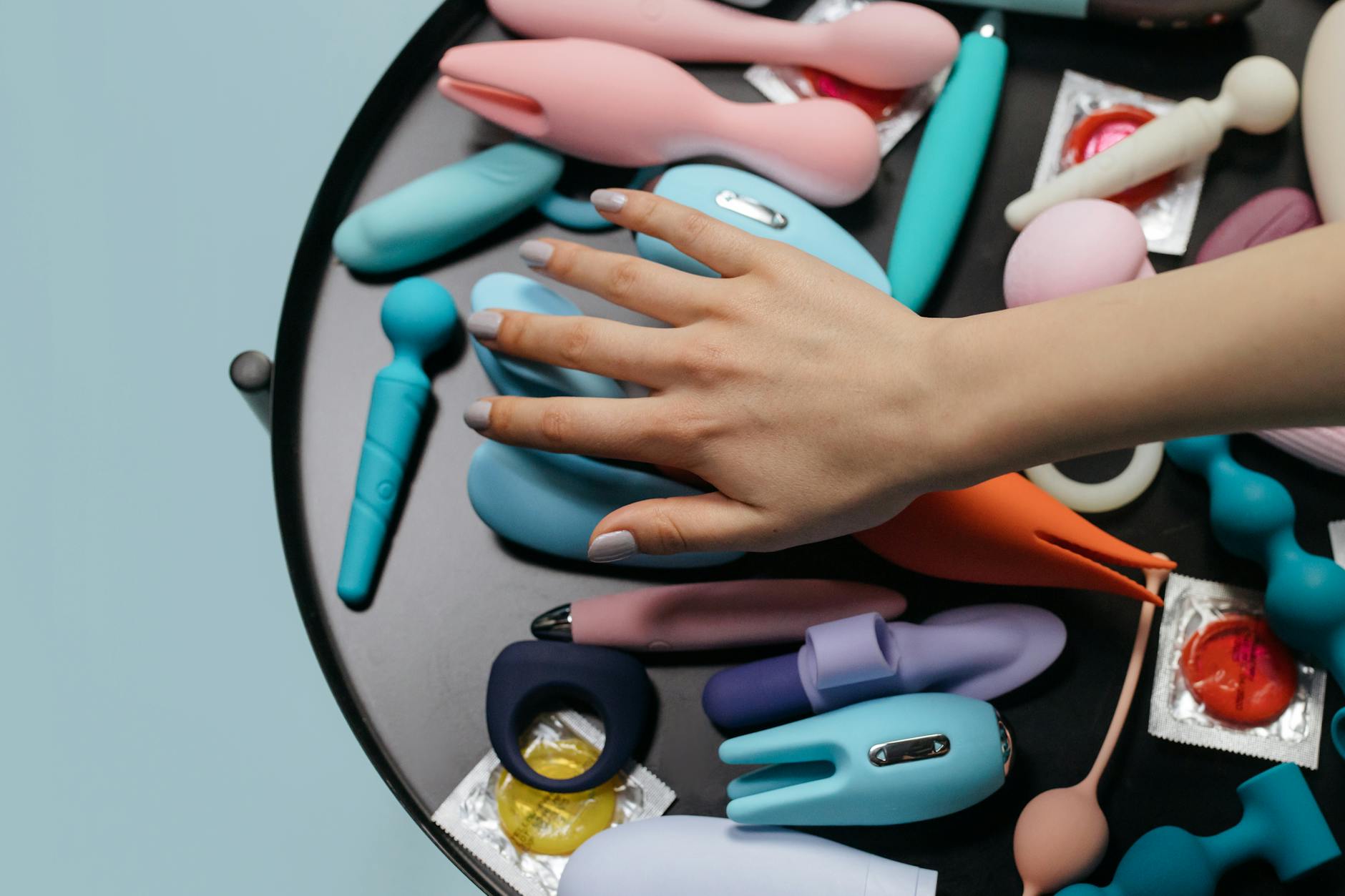
Photo by cottonbro studio on Pexels
The conversation underneath the conversation
If you're in your first serious relationship after divorce, there's almost always a conversation happening beneath the surface about whether toys mean something is "wrong" with the sex or the relationship. It doesn't. But your partner might be carrying that fear.
Name it directly: "I'm not bringing this in because something's missing with you. I'm bringing this in because I spent years not knowing what I wanted, and now I'm learning. You get to be part of that."
Some partners will be relieved. Some will feel insecure at first and then move into curiosity. Some will shut down. If your partner shuts down, that's useful information about whether this relationship has the flexibility you need. That's not a reason to drop the vibrator. It's a reason to have a bigger conversation about what partnership means now.
For partners who do engage: lemon vibrators are efficient. They work fast. That speed sometimes makes new partners nervous. "Why do you come so much faster with that?" Because it's a focused kind of stimulation. It's not personal. It's physics. Explain that. Remind them that your capacity for pleasure with them hasn't shrunk. It's just different. Variation is normal.
How to use a lemon vibrator specifically during partnered sex
Lemon clitoral vibrators like the Lem are compact, which means they fit between bodies. During partner penetration, you (or they) can use it on your clitoris while they're inside you. This is not cheating. This is not "needing help." This is information gathering. You're learning what combinations of stimulation feel good now, post-divorce, with this particular person.
Start slow. Use it on the lower settings first (patterns 1-3). Your nervous system is still learning to trust that pleasure is available. Overstimulation early on can trigger a protective shutdown. Build toward higher intensity over weeks and months, not minutes.
Focus on consistency of sensation, not novelty. The brain can get caught chasing the next thing instead of settling into what's actually happening. Let yourself stay with one pattern, one sensation, for 2-3 minutes. That steadiness is how your nervous system finally exhales.
Tell your partner what you're experiencing in real time, not after. "This is good." "I need a pause." "Keep going." Not because they need constant direction, but because narrating your own pleasure out loud is an act of reclaiming it. You're saying: I know what I want. I'm allowed to ask for it. You matter enough to me to use words instead of just hoping you guess.
The grief piece (yes, it's real)
Sometime in the middle of rebuilding pleasure with a new partner, you might hit a wall of sadness. You might be using your lemon vibrator and suddenly feel grief about the years you didn't have good sex with your ex. About the intimacy you could have had but didn't. About time wasted.
That's not a sign you're doing this wrong. That's your nervous system processing. Sit with it. Tell your partner, if you're with them: "I'm feeling some big feelings. This is good, and it's also bringing up some old stuff." That's not a reason to stop. That's actually evidence that you're healing.
Healing isn't linear. Pleasure after divorce isn't linear either. Some weeks your lemon vibrator will feel amazing. Some weeks it'll feel underwhelming. Some weeks you'll want it every day. Some weeks you won't want it for two weeks. That variation is data, not failure.
Practical stuff that actually helps
Use water-based lubricant every time, even if you don't think you need it. Divorce stress, new-relationship anxiety, and nervous system hypervigilance all suppress natural lubrication. Adding lube removes friction and removes a reason for your body to tense up.
Warming up takes longer after divorce because your nervous system is more guarded. Budget 15-25 minutes of non-genital touch before you bring the vibrator in. Touch your partner's arms, back, shoulders. Let your body register: this person is not going to hurt me. This takes time.
If you experience pain at any point, stop immediately. Pain is your nervous system saying no. Don't push through it hoping it'll get better. A good lemon vibrator should feel good, not tender or sharp. If something hurts, that's information about whether you need more time, more lube, a different approach, or possibly a conversation with a provider.
Keep the vibrator charged and accessible. Having to dig through a drawer to find it adds friction (both literally and emotionally) to the process. Keep it on your nightstand. Keep it normal. This is part of your life now.
People also ask
Will my new partner feel insecure if I use a lemon vibrator?
Some partners will, initially. That insecurity usually comes from the belief that vibrators mean their partner doesn't find them attractive or that the relationship has a problem. You can't logic someone out of that feeling. You can be clear about what's true: you're attracted to them. You're deepening your own capacity for pleasure. These are not mutually exclusive. The insecurity often softens when they see how much pleasure you have, and how much of that pleasure is shared with them. Sometimes it doesn't soften. That tells you something important about the relationship.
How long should I wait after divorce before introducing toys to a new relationship?
There's no universal timeline. But I'd suggest: start using the vibrator solo within the first month of the new relationship (or as soon as you feel steady in your body). Wait to introduce your partner to it until you've had the solo practice and you feel genuinely interested in sharing it, not pressured. That could be six weeks. That could be six months. The readiness is in your nervous system, not in a calendar.
Can lemon clitoral vibrators help if I'm worried I've lost the ability to orgasm after divorce?
Very often, yes. Numbness after divorce is usually protective, not permanent. Lemon vibrators are extremely efficient at accessing clitoral sensation because of the suction-based stimulation. Many people who haven't had an orgasm in years recover that capacity within a few weeks of regular use. If it's been longer than a month and nothing's shifting, talking to a sex therapist or pelvic floor specialist is worth considering. But most people surprise themselves with how quickly sensation returns once they give their body permission.
What if my partner wants to use the vibrator on me but I'm not ready to let them?
That's completely legitimate. Your body's readiness to be touched by someone new is its own timeline. You can use the vibrator while they're present but not touching you for weeks if you need to. You can be explicit: "I'm not ready for you to hold it yet. That feels like too much vulnerability." That kind of honesty actually builds trust faster than fake readiness.
Is it normal to feel disconnected or numb while using a lemon vibrator after divorce?
Yes, and it usually passes. Your nervous system may need several sessions to believe it's safe to let sensation in. If you're using the vibrator regularly and still feeling completely numb after 3-4 weeks, that's worth talking to a therapist about. Sometimes numbness is protective because something else is unsafe in the relationship (or your nervous system perceives it as unsafe). The vibrator won't solve that. The safety work comes first.
Can we use a lemon vibrator if our sex life has been non-existent since my divorce?
Yes. In fact, that's often the best entry point. When there's no existing pattern, you're not trying to fix something. You're building something new. Start with solo exploration. Move to partnered presence. Then move to participation. You're not resurrecting an old dynamic. You're creating a new one.
The bottom line
Divorce changes how you relate to pleasure, but it doesn't take pleasure away. Rebuilding intimacy with a new partner after divorce is possible, and often deeper than what came before, because you're bringing intention instead of assumption. A lemon vibrator is a tool for that intention. It's not a band-aid. It's not a substitute for your partner. It's a way of saying to your own body: you deserve to feel good. And to your partner: I'm letting you into this.
That's the real work. The vibrator is just the vehicle.
If you're navigating this transition and want support beyond what you can find in your own exploration, reach out. The first conversation is always the hardest, and you don't have to do it alone. Contact us to talk through what you're experiencing.