When it's been years, nervousness makes perfect sense
Let's start here: if you haven't had an orgasm in five years, or ten, or since before your kids were born, you're not broken. Your body hasn't forgotten. What's happened is that pleasure stopped being a safe, accessible part of your life. Maybe there was a breakup, or a medical thing, or a partner who didn't care much about your experience. Maybe life just got so full there was no space for it. That's different from dysfunction. It's neglect, and neglect is reversible.
The nervousness you're feeling right now? That's actually useful information. It means you know what's at stake. You know it matters.
What happens neurologically when you take a long break
Your nervous system doesn't erase the pathways for pleasure. But it does build up what I call "anticipatory anxiety" around orgasm. You want it to happen. That wanting creates pressure. Pressure kills arousal. You're stuck in a loop before you even start.
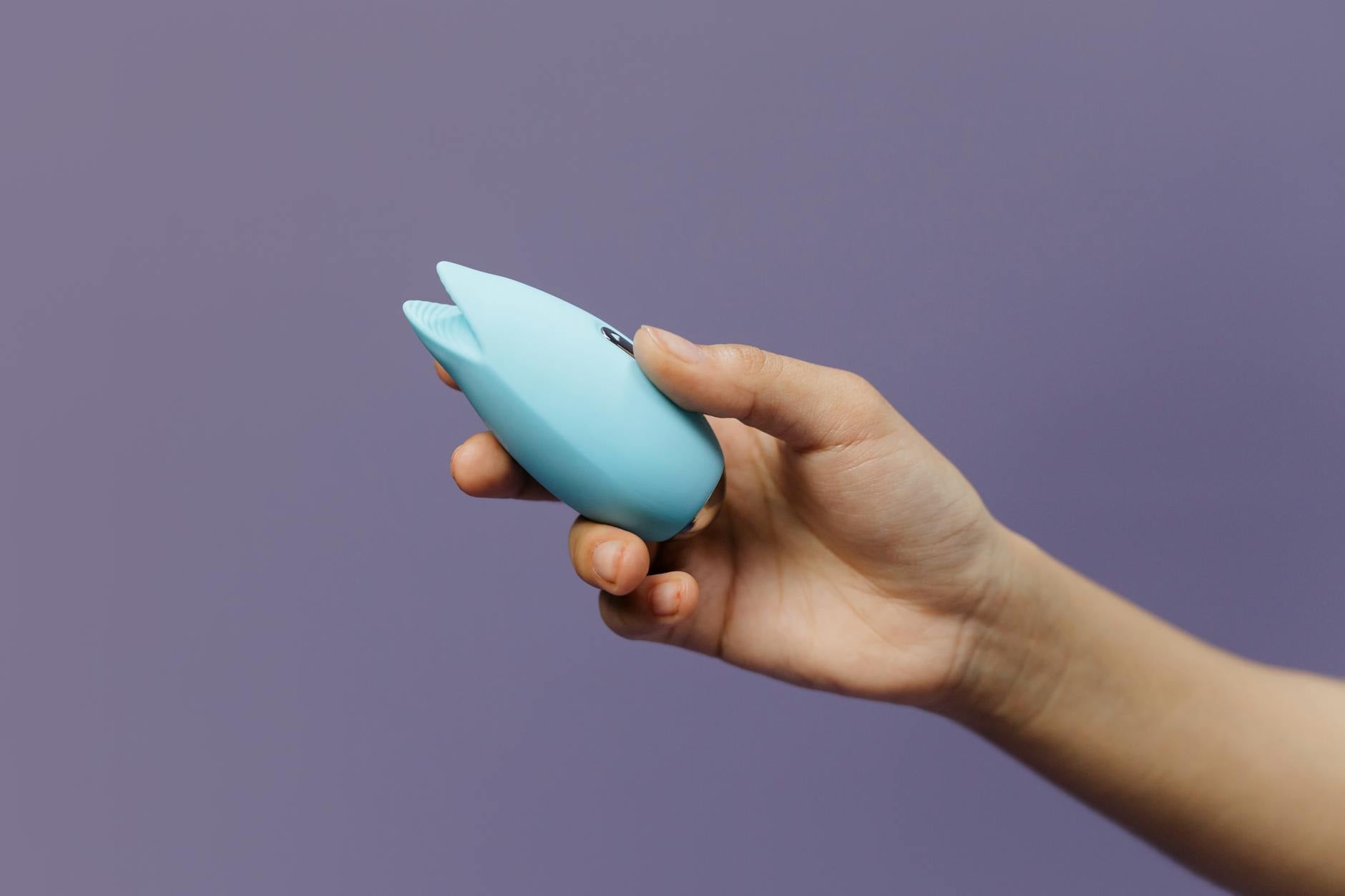
Here's the weird part: lemon vibrators break that loop faster than almost anything else. Not because they're magic, but because they introduce intensity and rhythm that your nervous system can't argue with. You can't think your way out of a strong suction sensation. Your brain goes quiet. Arousal builds without the narration.

Photo by cottonbro studio on Pexels
Why lemon clitoral vibrators specifically help with orgasm anxiety
There are three mechanical reasons lemon vibrators are so effective when you're nervous.
First, they work on suction, not vibration alone. Your clitoris responds to pressure waves differently than it does to steady buzz. The sensation is less predictable, which paradoxically makes it easier to surrender to. Your mind has less to defend against.
Second, the intensity is high but not overwhelming if you start low. You can build gradually. This matters when you're nervous because it gives you control. You're not white-knuckling through an experience you didn't consent to on your own terms.
Third, they're designed for people who have struggled with sensation. A lemon sexual toy like the lemon sucker creates a seal around the clitoris, stimulating the entire area at once rather than focused pressure on one point. For someone rebuilding the orgasm pathway, this distributed stimulation is less triggering than a bullet or wand.
The setup that actually works
You need three things: privacy, time, and zero agenda.
Privacy doesn't mean a locked door necessarily. It means you're not listening for footsteps. If you live with a partner, tell them you need an hour alone. Don't explain. They don't need to know it's sexual. You're taking time for yourself. That's enough.
Time means 30 to 45 minutes, minimum. You're not rushing to an orgasm. You're exploring sensation. If nothing happens, that's still a win because you practiced not being anxious. Seriously. Breaking the anxiety loop is the first goal. Orgasm comes after.
Zero agenda is the hard part. You can't go into this expecting an orgasm. The moment you do, pressure shows up. Instead, go in with curiosity. "I'm going to figure out what feels interesting." That's your whole job.
How to actually start using a lemon vibrator when you're nervous
Begin clothed. Sounds weird, but it helps. Put the lemon vibrator on the lowest setting and hold it against your clothes, over your clitoris, for a few minutes. Let your nervous system get used to the sensation without the stakes of direct contact.
Notice what happens. Do you tense? Does your breathing change? That's data, not failure. Your body is learning that this is safe.
After a few minutes, remove your underwear and try direct contact on the lowest setting again. Same principle. Suction on skin feels different. Spend five minutes just getting oriented. No expectation of arousal. You're mapping the sensation.
Then here's the thing nobody tells you: go slower than you think you need to. If you feel like turning it up to level 3, stay on level 2 for another five minutes. When arousal starts building, you'll feel an urge to increase intensity. That's when you can move up. But don't chase the feeling. Let it come to you.

Photo by cottonbro studio on Pexels
When nothing happens and that's still okay
First time using a lemon clitoral vibrator after years of nothing? You might feel sensation, relaxation, mild pleasure. You might feel totally nothing except self-consciousness. Both are normal.
If you feel nothing, your nervous system might be protecting you. That's not a bug. Your body has learned that pleasure isn't safe or available. Using the lemon vibrator is a conversation with that protective part. You're saying: "Okay, I hear you. We're going to go slow. I'm not forcing this."
Do it again the next day. And the next. Sometimes after three or four sessions, something shifts. Your nervous system realizes nothing bad happens. Arousal sneaks in. This is how trauma recovery works, actually. Nervous system first, pleasure second.
If nothing shifts after a week, that's still useful information. It might mean you need to talk to a therapist about what happened in that gap. Or your libido is genuinely low and you'd benefit from checking in with a doctor. Both of those are real possibilities. A lemon vibrator isn't a fix for everything.
Dealing with intrusive thoughts mid-session
Your brain is going to tell you things while you're using a lemon sexual toy. "This is taking too long." "I should be better at this by now." "My partner wouldn't like seeing me do this." "I'm wasting time."
That's your nervous system talking, not truth. Here's what I tell my clients: notice the thought, acknowledge it's there, and bring your attention back to sensation. Where is the vibrator touching you right now? How does the pressure feel? What temperature is your skin?
That's it. No judgment. No trying to fix the thoughts. Just redirect. Your mind will quiet down faster that way.
When to involve a partner and when not to
If you're rebuilding alone, do that first. Your orgasm isn't anyone else's job but yours. Get comfortable with the sensation, with yourself, with the lemon lem vibrator. Then decide if you want to bring a partner in.
When you do, tell them the truth. "I've been anxious about this, and I'm learning how my body responds. I might want you nearby, or I might want space. I don't know yet." That honesty takes so much pressure off. They know this isn't about them.
If your partner is the reason you're nervous (they've shamed you, or they've been absent), that's a different conversation. That's therapy work. A lemon clitoral vibrator can help, but it can't fix a relationship problem.
FAQ
How long does it usually take to have an orgasm again after years without?
Everyone's different, but anywhere from one session to three months. Some people come back quickly. Others need their nervous system to slowly learn that pleasure is safe. That's not a failure. You're rewiring something deep. Be patient with yourself.
Is it normal to feel guilty using a lemon vibrator when you're in a relationship?
Completely normal, and also worth examining. Where did that guilt come from? A partner's judgment? Cultural messaging? Your own internalized shame? A lemon sexual toy isn't cheating. It's self-knowledge. If your partner has made you feel bad about your own pleasure, that's actually a relationship issue worth addressing with a therapist.
What if I use the lemon sucker and it actually feels uncomfortable?
Try a different pressure level, or a different toy altogether. Not every vibrator works for every body. Some people prefer straight vibration over suction. Some need less intensity. Hallo Nancy's Lemons makes a whole range of lemon adult toys designed for different sensitivities. The goal is pleasure, not forcing yourself to enjoy something that doesn't work.
Should I tell my doctor I'm nervous about orgasm?
Yes, especially if you're on antidepressants or other medication that can affect sexual response. Some SSRIs make orgasm harder. That's addressable. If there's a medical component, your doctor needs to know so you're not blaming yourself for something neurochemical.
Can I use a lemon vibrator if I have pelvic floor tension?
Let me be careful here: if you have diagnosed vaginismus or serious pelvic floor dysfunction, you might want to work with a pelvic floor physical therapist alongside pleasure work. That said, low-pressure stimulation with something like a lemon clitoral vibrator can actually help some people relax. The key is slow, exploratory use. If it causes pain, stop and reach out to a professional. You can read more about this in our guide on how to use lemon vibrators when you have vaginismus or pelvic floor tension.
What should I do if I still can't orgasm after a few weeks?
Reframe the goal. You're not using the lemon vibrator to come. You're using it to rebuild your relationship with sensation and pleasure. Orgasm might follow. It might not, depending on what's happening in your life or your body. Both outcomes are valid. If you want to explore further, talk to a therapist or sex coach. Sometimes the block is deeper than self-pleasure can reach.
You're not starting from zero
Your body remembers pleasure. That's biological. What you're rebuilding isn't lost capacity. It's permission. It's the belief that you deserve this time, this sensation, this experience of yourself as alive and feeling.
Using a lemon vibrator is that permission made tangible. Start slow. Show up consistently. Let your nervous system learn it's safe. That's all you need.
If you want to talk through what's getting in the way, reach out. That's what we're here for. You can contact Hallo Nancy's Lemons anytime you need someone in your corner.