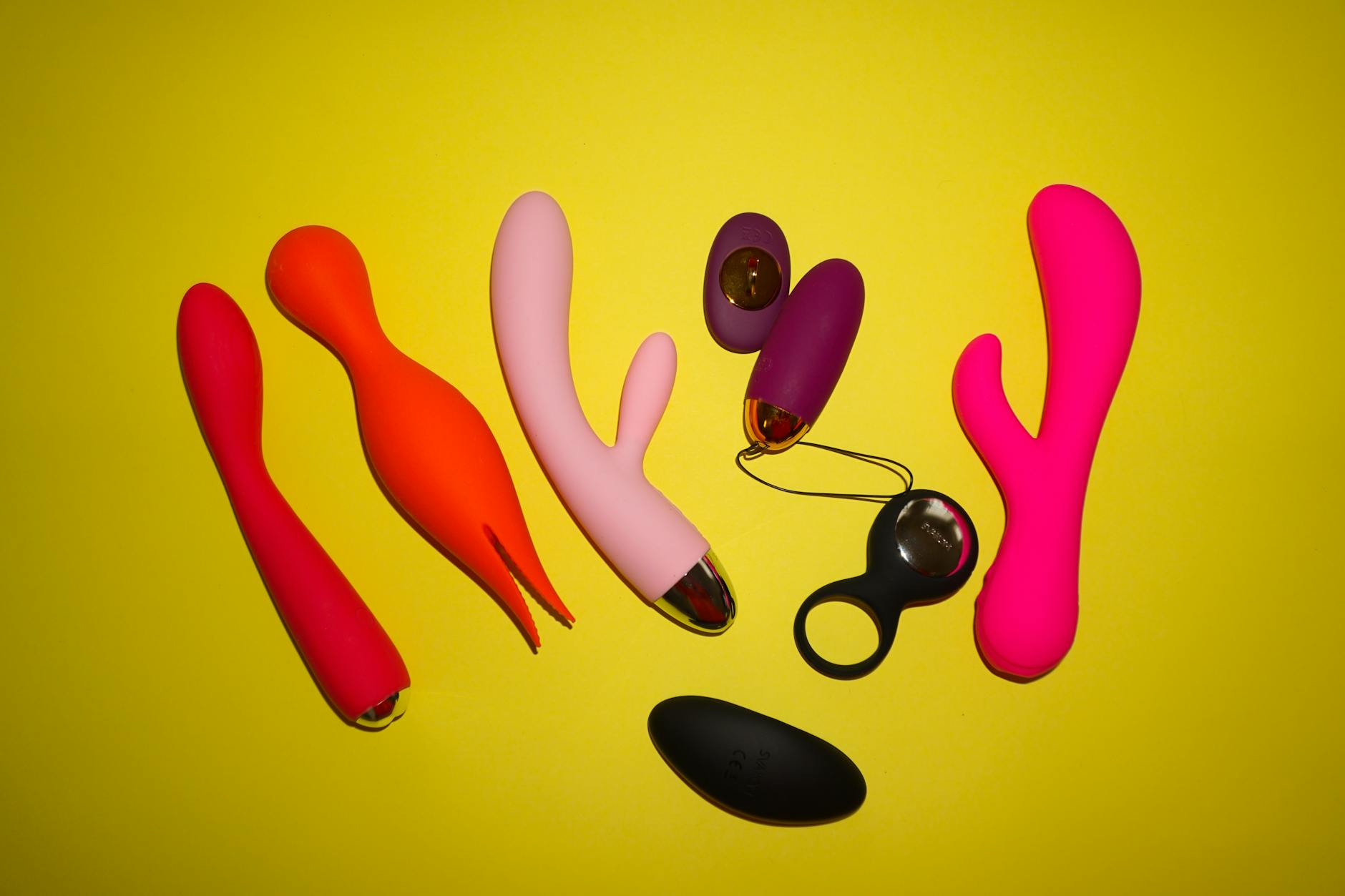
Why Lemon Vibrators Feel Different After Major Life Changes
Divorce, grief, a new job, moving houses. Your body remembers. Here's why pleasure changes during transition, and how to reconnect with what feels good.
Your body doesn't compartmentalize stress the way your brain tries to. When you're in the middle of a divorce, a career shift, a move, or grief, your nervous system is in survival mode. Your arousal system doesn't care that intellectually you know you deserve pleasure. It's too busy running the threat-detection software.
So when you reach for your lemon vibrator and it feels muted, different, or harder to connect with, you're not broken. You're experiencing what my clients describe as the "pleasure lag." It's real, it's temporary, and it's worth understanding.
Let's talk physiology for a moment. Arousal requires your parasympathetic nervous system. That's the rest-and-digest mode. But during a major life change, your sympathetic nervous system is running the show. That's fight-flight-freeze. The two systems compete for resources, and your body will always prioritize survival over sensation.
When you're in chronic stress, a few things happen at the cellular level:
Cortisol stays elevated. This hormone suppresses sex hormone production. Your body literally deprioritizes reproductive function when it thinks you're in danger. It's ancient wiring.
Blood flow patterns shift. During arousal, blood redirects to your clitoris, vulva, and vagina. But stress triggers blood to concentrate in your limbs (ready to run) and your core (ready to protect). Your genital tissues get less of what they need to swell and respond.
Neural pathways quiet down. The brain regions associated with pleasure and sensation (your insula, your prefrontal cortex) literally become less active when you're stressed. Meanwhile, your amygdala, which detects threat, is on high alert. It's hard to feel pleasure when your brain is checking for danger.
This is why your lemon vibrator might feel less responsive, less intense, or harder to use during a transition. It's not the device. It's your nervous system's priorities.
Here's where relationships, grief, and identity come in. A major life change isn't just a biological event. It's also an identity event. If you're divorcing, you're grieving a version of yourself that existed in that partnership. If you're starting a new job, you're anxious about who you are in this new context. If you're moving, you're leaving behind physical anchors that grounded your sense of self.
Pleasure, especially clitoral pleasure with a device like a lemon sucker, requires a particular kind of presence. You need to be somewhat still. Somewhat focused. Somewhat willing to occupy your body without judgment.
But during major transition, your mind is often scattered across multiple future outcomes, multiple what-ifs, multiple versions of how this could go wrong. Your attention is fragmented. Your permission to feel good feels conditional or even selfish.
I've had clients tell me, "I feel guilty using my vibrator while my ex and I are negotiating custody." Or, "How can I think about pleasure when my parent is in the hospital?" These aren't weakness. They're the sound of your moral brain trying to make sense of what you deserve during a time when everything feels uncertain.
I mention lemon vibrators and lemon clitoral vibrators often in my practice because their design addresses something particular about reconnection. The suction mechanism doesn't require the same quality of arousal to feel good as a traditional vibrator does. You don't need to be fully engorged or fully relaxed. The device creates sensation somewhat independently of your body's readiness.
That matters during transition because it means you can experiment with pleasure before your nervous system has fully calmed down. You can use a lemon sucker to practice re-occupying your body, practice feeling sensation, practice being present. It's a gentler entry point than waiting for full arousal to arrive on its own.
The other reason I recommend them: they're deliberate. You have to sit down, hold the device, stay with it for a few minutes. That ritual of intention is exactly what many of my clients need during chaos. It's a small act of self-care that says, "My pleasure matters, even now."
This varies wildly, but here's a rough timeline I see most often.
Weeks 1-3 of a major transition: Your nervous system is still in acute stress. Pleasure might feel nearly impossible. This is normal. Your body is doing its job.
Weeks 4-8: You might start to notice small windows. Maybe you have 30 minutes where you're not thinking about the crisis. In those windows, arousal might peek through. This is when experimenting with your lemon vibrator can help, even if you're not fully aroused. The goal isn't orgasm. The goal is reconnection.
Months 2-4: Your nervous system starts to believe that the immediate danger has passed. Sleep improves. You have more hours where you're not in crisis-management mode. Arousal becomes more accessible. This is when pleasure often starts to feel familiar again.
Month 4 onwards: You're rebuilding your baseline. You're not back to normal, but you're not in survival mode either. Pleasure feels possible, and you're starting to remember why you wanted it in the first place.
But listen. This isn't linear. You'll have setbacks. You'll have a day where everything feels fine and then a text from your ex lands and you're right back in fight-or-flight. That's okay. That's expected.
Honestly, the advice I give my clients during major transitions is different from general pleasure advice. Here's what actually helps.
Start without expectation. Use your lemon vibrator when you feel even slightly curious, not when you think you "should" feel aroused. Curiosity is available during stress. Arousal often isn't.
Make it a self-care ritual, not a performance. Light a candle if that helps. Put your phone in another room. Tell your partner or household that you need 20 minutes. The ritual creates a container that signals safety to your nervous system.
Lower the bar on what counts as success. A successful session during major transition might just be "I felt the sensation and stayed present for five minutes." That's a win. You're literally retraining your body to believe that pleasure is possible even during difficulty.
Use sensation over orgasm as the goal. Your lemon clitoral vibrator is perfect for this because you can use it to explore sensation and texture without needing to reach an endpoint. You're practicing presence, not chasing a result.
Notice what actually feels good right now. Your preferences might shift. You might need slower patterns. Lower intensity. More warmth beforehand. Pay attention instead of assuming you should want what you wanted before the transition.
If you're six months into a major life change and pleasure still feels impossible, or if pleasure feels dangerous in a way you can't quite name, that's worth exploring with a therapist. Sometimes what looks like "my vibrator doesn't work anymore" is actually "I don't feel safe in my body right now," and that's a bigger conversation.
Similarly, if you notice that you want pleasure but your body won't cooperate, and this persists beyond four months, talking to your doctor can help rule out anything medical that might be getting in the way.
But mostly, know this: the disconnection you're feeling is temporary. Your capacity for pleasure didn't disappear. It's just on pause while your nervous system catches up to the fact that you're safe enough to feel good again. A lemon vibrator, when you're ready, can help you remember what reconnection feels like.
Your nervous system doesn't care what you want intellectually. When you're in a major transition, your body perceives threat. Arousal requires safety. Your sympathetic nervous system (fight-flight) and parasympathetic nervous system (rest-digest) can't both be fully active at the same time. Survival mode always wins. This is normal wiring, not a character flaw.
Absolutely. In fact, during major life transitions, this is often the best approach. The suction mechanism of a lemon sucker creates sensation independently of your arousal level. You don't need to be engorged or fully relaxed. You can use it to practice being present in your body and to gently explore sensation. Many people find that a few minutes with the device actually helps their nervous system start to calm down and arousal can follow.
It varies, but most of my clients notice their arousal returning on some level between 6 and 12 weeks after the acute crisis passes. That said, full reconnection often takes longer. You're not just waiting for hormones to balance. You're also rebuilding your sense of safety and identity. This is why I recommend lemon clitoral vibrators during the in-between time. They help you stay connected to your body while you're healing the rest.
Yes, ideally before it becomes a source of tension in your relationship. A conversation might sound like, "I'm dealing with a lot right now and my body is reflecting that. I still want to be intimate with you, but I might need more time to warm up or a different approach." This prevents them from internalizing your nervous system's stress response as rejection. How Lemon Vibrators Spark Better Conversations About Pleasure in Relationships can help frame that conversation.
Completely normal. Your body has been in survival mode. Your nervous system has rewired itself around threat detection. Your preferences might shift temporarily or even permanently. You might want more foreplay. Less intensity. A different kind of touch. This isn't a sign that something is wrong with you or your relationship. It's a sign that you've been through something and your body is telling you what it needs right now. A lemon vibrator is a low-pressure way to explore what new preferences might be emerging.
If you're past the acute crisis phase and arousal still feels completely unavailable, it's worth checking in with a doctor to rule out anything physical, and with a therapist to explore whether there's a deeper emotional piece. Sometimes what looks like "stress killed my libido" is actually "I'm grieving and my body is protecting me," and that's a longer, gentler process that deserves real support.
Major life transitions don't erase your capacity for pleasure. They just put it on hold while your nervous system recalibrates. Your lemon vibrator will be there when you're ready. And when you are ready, that reconnection with sensation and presence is one of the most grounding, self-affirming things you can do during rebuilding.
If you're in the middle of a transition right now and pleasure feels like a distant memory, be gentle with yourself. You're doing the hard work of reorganizing your whole life. Your body's job right now is survival. Pleasure will come back. Start small. Use a lemon sucker. Stay curious. And know that wanting to feel good, even during crisis, is exactly right.