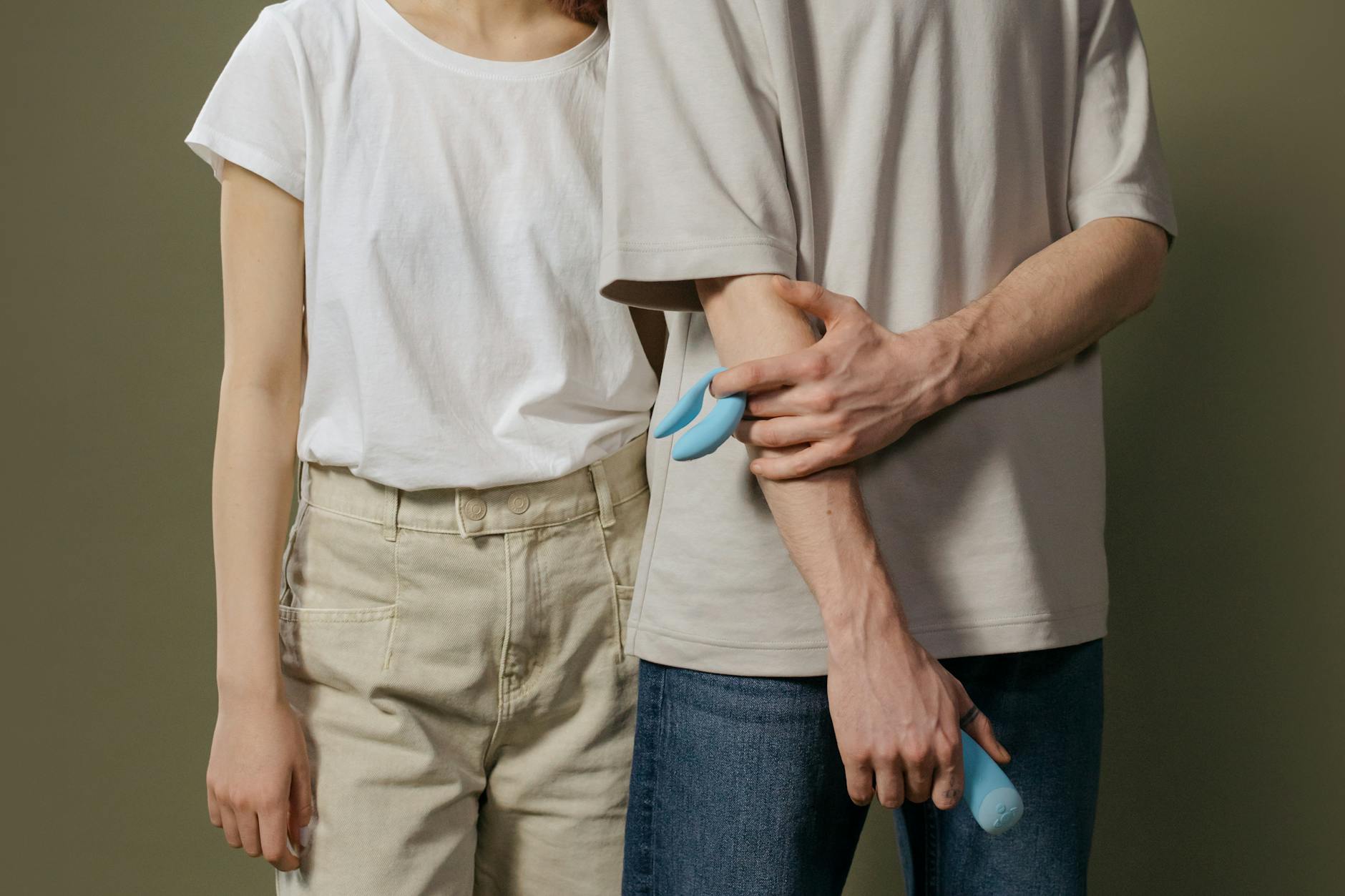
When relationships need to restart
Let's be real. When major life events happen—having kids, grief, health changes, moving houses, career stress—the first thing that usually gets shelved is sex. Not because anyone stopped wanting pleasure, but because your nervous system is in triage mode. Everything contracts.
Then six months or three years passes, and you both realize you're more like roommates than partners. The guilt kicks in. The pressure rises. And suddenly, the thing that used to be easy feels impossibly complicated.
Here's what I've seen repeatedly in my practice: when couples try to force their old rhythm back, it fails. The body remembers the disconnection. Arousal doesn't just switch back on because you've decided you're ready. But lemon vibrators, specifically the suction-based technology in clitoral vibrators like the Lem, create a shortcut. They restart pleasure from the body upward, rather than from intention downward.
The disconnect is real (and totally common)
One of the most consistent patterns I see in couples therapy is this: after a major relationship rupture or life event, people expect intimacy to resume the moment the stressor ends. "The baby's sleeping through the night now." "My job finally stabilized." "We're out of crisis mode." And then nothing. Physical desire doesn't auto-correct just because the calendar has turned. The nervous system needs reconditioning.
This happens because arousal is partially learned behavior. When you go months without sex, the neural pathways actually get quieter. Your partner can be attentive, the timing can be right, the environment can be ideal—and your body still won't respond the way it used to. It's not broken. It's just rusty.
For many people, especially those with vulvas, the gap between "willing to have sex" and "actually aroused" grows wider the longer intimacy has been absent. Lemon clitoral vibrators solve this in a specific way: they bypass the need for spontaneous arousal and directly stimulate the nerve-rich tissue that produces pleasure without requiring your brain to get there first.
Why suction technology works better after disconnection
There's a practical reason lemon suction toys—like our flagship lemon vibrator—outperform traditional vibrators when couples are rebuilding intimacy after major change.
Traditional vibrators require direct, consistent contact with sensitive tissue to create sensation. After months of no sexual contact, that intensity can feel overwhelming or even slightly painful. Your tissue needs gradual re-introduction, not a sudden jolt.
Suction technology is gentler. The Lem, for example, uses gentle pulsing air waves that stimulate the clitoral complex without the aggressive friction of a traditional vibrator. It feels more like a partner's mouth—which activates different neural pathways and is less startling to a nervous system that's been offline. For someone recovering from disconnection, this is huge.
The suction creates stimulation that feels almost protective rather than demanding. You can use it solo first to rebuild your own pleasure rhythm, which then makes partnered sex less like a performance and more like a conversation.
The path back: solo use before partnered pleasure
If you're reading this because intimacy has lapsed in your relationship, here's what actually works.
Start alone. This sounds counterintuitive when the problem is "we're not connecting," but it's essential. Using a lemon clitoral vibrator solo for 15-20 minutes, two or three times a week, literally retrains your nervous system to accept pleasure. It reminds your body what arousal feels like. It reactivates the neural pathways that atrophied during the disconnection.
Do this for at least four weeks before involving your partner. I know that's longer than you want to wait. But if you jump straight to partnered sex, you'll likely have the same failure you had before—physical dissatisfaction, followed by shame, followed by more avoidance.
Once you've reestablished your own pleasure response, bring it into the relationship slowly. Some couples use the toy together during foreplay. Others use it solo while their partner is present but focused elsewhere—creating the mental safety you need while your body rebuilds its capacity for sensation.
How partners can support this process (without it being awkward)
If your relationship has contracted due to major life change, the partner who's waiting for intimacy to resume probably has some anxiety about it too. Performance pressure works both ways.
The kindest thing you can do together is remove the expectation that sex will look like it used to. It won't. Not yet. Maybe not ever, and that's fine.
Instead, frame the reintroduction of pleasure tools like lemon vibrators as something collaborative, not compensatory. It's not "because something's wrong," it's "because we're starting fresh." Some couples find it helpful to have a partner present while using the toy—not to be used on them, but just to be in the room. You're not ignoring each other; you're rebuilding together.
Other couples find it works better solo at first. Both are valid. The key is that someone actually brings it up, names it, and gives both partners permission to say yes or not yet. The relief alone often shifts something.
Partners can also help by removing the "sex or nothing" binary. In the months when penetration doesn't feel right or arousal is still rebuilding, the toy becomes a middle ground. You're still intimate. You're still present. You're just using a different tool.
When lemon vibrators replace the conversation you actually need to have
A quick and important caveat: if the disconnection in your relationship is emotional—resentment, betrayal, a fundamental misalignment—lemon suction toys won't fix it. They'll make sex feel better, but they won't make you feel connected.
If the distance is primarily due to life stress or hormonal change or logistics (exhaustion, no childcare, grief), a clitoral vibrator becomes a genuine tool for reconnection. But if the distance is rooted in hurt between you, you need a therapist more than you need a toy.
That said, I've also seen couples use the reintroduction of pleasure—whether through a Lem or any lemon clitoral vibrator—as the opening move toward deeper repair. Once the body feels good again, the nervous system calms. Once the nervous system calms, people can have harder conversations.
The research supports this (really)
Studies on couples and sexual satisfaction show that novelty and perceived care around intimacy significantly improve relationship outcomes. When partners initiate a conversation about pleasure and introduce new tools together, it signals "I still want to be close to you," which is actually the emotional message that's been missing.
Moreover, research on solo pleasure habits shows they improve partnered sex satisfaction. When people develop independent arousal skills—which is what using a lemon vibrator solo actually teaches you—they communicate better about what they want and need. Less guessing. Less resentment. More actual connection.
Starting the conversation
If you're the one who wants intimacy to return, here's a script that works: "I've been thinking about us. I miss the physical part of our relationship. I was researching ways to make it feel less heavy or weird to start again, and I found that some couples use toys to ease back in. Would you be open to trying something like that?"
That's not blaming. It's not pressure. It's a clear ask with a tool attached.
If you're the one who's been touched out or uninterested, try this: "I know we've been disconnected. I'm scared it won't feel the same. Would it help if we used something that made it feel more low-pressure to restart?"
Actual conversation, actual permission, actual plan.
FAQ: Rebuilding intimacy with lemon vibrators
Will using a toy make my partner feel inadequate?
Not if you frame it correctly. The toy isn't a replacement for your partner. It's a bridge back to your partner. In fact, couples who use toys together report feeling more connected, not less. The vulnerability of bringing a tool into the bedroom actually builds intimacy when both people are on board.
How long does it actually take to rebuild intimacy?
There's no fixed timeline, but most couples start feeling reconnected within 6-8 weeks of consistent, low-pressure physical contact and pleasure exploration. Some feel it in two weeks. Some need three months. The pressure comes from expecting it to match your old rhythm, which it won't.
Should I use a lemon clitoral vibrator solo before my partner sees it?
Yes. Four to six weeks solo is the sweet spot. You'll know what you like, your body will remember arousal, and you'll feel less self-conscious introducing it with your partner. You're not hiding it. You're preparing.
What if my partner refuses to engage with pleasure tools?
That's information. It might mean they have shame about sex, or anxiety about change, or a different idea about what intimacy looks like. But refusal to engage after you've named the disconnection is worth exploring in therapy. Intimacy requires both people's participation.
Can a lemon suction toy help if the disconnection is about mismatched desire?
Partially. If one partner wants sex once a week and the other wants it twice a month, a toy won't solve that mismatch. But it can make the sex you do have more satisfying, which sometimes eases the tension around frequency. The real issue still needs conversation.
Is it normal that sex feels different after a long break?
Completely normal. Your body has changed, your partner's body has changed, and you're both out of practice. That's not failure. It's a fresh start. Lemon vibrators help because they don't require you to pretend things feel the same. They help you explore what feels good now.
The honest closing
Rebuilding intimacy after life fractures your relationship isn't a one-night fix. But it doesn't have to be complicated. Start with your own pleasure. Introduce the tool when you're ready. Have the conversation with your partner. Use a lemon clitoral vibrator as permission to restart rather than as pressure to perform. Your body will thank you. Your relationship will too.
If you're ready to take the first step, we can help. Reach out if you have questions about what tool might work best for your situation.